 Yet again we have a volume with a lot of creators, so here's a separate post to carry the labels for some of them.
Sunday, 22 July 2012
Essential Web of Spider-Man volume 2 - creator labels
Yet again we have a volume with a lot of creators, so here's a separate post to carry the labels for some of them.Saturday, 21 July 2012
Essential Marvel Saga
This post has been replaced by two separate posts that rewrite and expand its contents.
Friday, 20 July 2012
Essential Punisher volume 1
 As a little side step I'll now turn to Essential Punisher volume 1. This is one of the most unusual of all the Essential volumes as it is made up of many of the Punisher's appearances across multiple Marvel titles prior to getting his own ongoing series. Since over half the issues in this volume come from the various Spider-Man titles I've decided to include it in this series as another special. For what it's worth the volume originally came out before any of the issues in it had been reached by the other Essentials (and whilst all the Spider-Man issues have now been caught up with, at the time of writing the Captain America and Daredevil issues are still later than the most recent Essential volumes).
The issues contained here are:
- Amazing Spider-Man #129, #134-135, written by Gerry Conway and drawn by Ross Andru
- Giant-Size Spider-Man #4, written by Gerry Conway and drawn by Ross Andru
- Marvel Preview #2, written by Gerry Conway and drawn by Tony Dezuniga
- Marvel Super-Action #1, written by Archie Goodwin and drawn by Tony Dezuniga
- Amazing Spider-Man #161-162, #174-175, written by Len Wein and drawn by Ross Andru
- Captain America #241, written by Mike W. Barr and drawn by Frank Springer
- Amazing Spider-Man #201-202, written by Marv Wolfman and drawn by Keith Pollard, & Annual #15, written by Denny O'Neil and drawn by Frank Miller
- Daredevil #182 (part) & 183-184, written by Frank Miller & Roger McKenzie, drawn by Frank Miller
- Peter Parker, the Spectacular Spider-Man #81-82, written by Bill Mantlo and drawn by Al Milgrom, and #83, written by Bill Mantlo and drawn by Greg LaRocque
- The Punisher (limited series) #1-4, written by Steven Grant and drawn by Mike Zeck, & #5, plotted by Steven Grant, written by Jo Duffy and drawn by Mike Vosburg
This is a very different approach from the standard Essentials. Whereas most of the other volumes focus on a particular series and present an absolutely sequential run, only including issues from other series if they constitute the build up for the series or carry a crossover, this one is closer to a more conventional tradepaperback drawing together appearances from multiple titles, and also willing to present only the pages relevant to a character or storyline from a particular issue. It's a style that doesn't seem to have been repeated, probably because it steps a bit too far from the normal Essential approach. Nevertheless it's an interesting one-off, showing the Punisher over the years before he got his own ongoing series. (By all accounts for a long time a lot in Marvel had severe reservations about an ongoing series featuring a gun wielding protagonist who kills his opponents, despite having printed many Western comics in earlier years. But then that was a different age.)
In terms of continuity, reading this on its own can be a little confusing as it jumps through some ten years worth of Spider-Man developments. Some of them are mentioned in passing, such as taking a leave of absence from graduate school, or Jonah's breakdown, or twice we see people about to become the Green Goblin, but without the wider context it may confuse at first. Similarly the Daredevil issues overlap on Matt Murdock proposing to Heather Glenn whilst there are dark developments in her company, and the Captain America issue comes from a now forgotten period with Steve Rogers was working as a commercial artist. But this is par the course for crossovers and it's to the volume's credit that it (generally) didn't follow the pattern of early trade paperbacks that sought to cut out subplots and even rearrange the artwork in order to focus just on the reason for being collected. Instead it's nice to see the whole issues altogether, which better suits the collector that the Essential line appeals to. There is an exception with Daredevil #182 which only has the eight pages featuring the Punisher. This may have been part of a bigger Daredevil storyline but on their own the pages stand out. Still they are necessary for explaining the Punisher's escape after his previous capture.
But what about the Punisher himself? Well reading through these issues altogether it's clear that he was at times a victim of the Comics Code Authority rules, forcing Marvel to present a rather tamer version of the character than he could be, seen most notably with his use of "mercy bullets" that merely stun. The contrast is starkest between his 1970s appearances in the Spider-Man titles, printed with CCA approval, and those in Marvel Preview & Marvel Super-Action, both of which were part of Marvel's non-CCA approved magazine line aimed at somewhat older readers. Going into the 1980s issues, which start with Amazing Spider-Man Annual #15 there are signs that suggest the CCA rules were relaxed with the Punisher becoming harsher in his appearances, culminating in his first limited series where the character is more brutal and the violence more graphic than in anything previously seen with the CCA symbol on it.
This is also a sign of changing values in comics. The earliest superhero comics, and indeed the pulps that preceded them, emerged during a simpler era. Authority was good. Corrupt politicians, police officers and the like were rogues, not part of wider systemic failings. Heroes caught criminals but it was down to the system to deal with them. And the system invariably did, with many a villain's return mentioning either they had been released or they had escaped. Although it took a few years, heroes usually had a clear relationship with the law-enforcement community that gave their actions a stamp of legitimacy. And above all heroes were noble crusaders for the "right" values. Sometimes they even led the way - the first issue of Captain America had a cover showing him punching Hitler, months before the US entered the Second World War. The Silver Age broadly stuck to these conventions - Spider-Man might have been an outsider with a poor relationship with authority but there was never any doubt that he was on the side of right.
And then came the shocks of the late 1960s. American public opinion turned against the war in Vietnam. At home social changes and a backlash against them were causing ever more confrontation. And corruption was exposed at the very top of the system. Many of the old certainties fell away and the world was now a confused places. What was "right" now?
It was in this environment that both the Punisher, and his near contemporary Wolverine, were created. Both characters had an approach that was very different from the older generation of noble crusading heroes. Both took a much more dubious approach. Both characters enjoyed an early surge in popularity but also presented Marvel with a challenge given their nature. Consequently neither received an ongoing title until the late 1980s. But whereas Wolverine was in constant use due to his membership of the X-Men, the Punisher was used more sparingly.
Fundamentally the Punisher is a vigilante who serves as judge, jury and executioner. A soldier gone rogue, he perhaps reflected the 1970s belief that not all soldiers were noble crusaders and instead the military had produced monstrous killers who chose for themselves who would live and who would die. The Punisher might commit his atrocities on the streets of America rather than in the jungles of Vietnam, but he is a brutal killer never the less. His methods are such that at one stage he is shooting at any breach of the law no matter how minor - in one scene he shoots at a man merely for throwing aside a newspaper and missing a bin, and then when a taxi driver panics and jumps the lights he too is shot at. This particular storyline (Spectacular Spider-Man #81-83) focuses on the Punisher being apparently mad and ends with him being ruled insane. Later in the limited series it's revealed that he was in fact reacting to drugs he'd been unknowingly doped with, and once his system flushes them he reverts to normal - well for him that is.
Or perhaps not. The Punisher is an agent of justice, attacking only those who break the law. The law itself is not infallible - in the Daredevil issues we see Matt Murdock successfully get a man off a murder charge, only for his client to then calmly confess to the crime (Matt hadn't detected the lying because a pacemaker prevented a leap in the man's heart beat). As shown in his origin, the gangsters who killed the Punisher's family for witnessing an execution were able to evade prosecution by producing alibis, but weren't able to evade him. In such an environment the Punisher is a latter day cowboy, enforcing the law in places where the authorities fail and bringing justice to those who would otherwise be denied it. His victims have only themselves to blame for their fates and he is bringing those fats about efficiently. He is willing to work with other heroes and adapt to their values by using mercy bullets, and fundamentally is on their side.
Such are the two interpretations of the character. There are many wider issues flying around relating to the death penalty, to whether or not the police should be armed, to the efficiency of the legal system, to what rights law-breakers are still entitled, to the nature of a civilised society and so forth. Most of those questions are beyond the scope of this post but they do show how difficult the character can be to handle, especially when guest-starring in other titles. He can be a difficult ally of the lead hero or he can come into direct conflict over their values or somewhere in between. The conflict side is best shown in his encounter with Daredevil, whilst his alliance with Spider-Man is at its strongest in Giant-Size Spider-Man #4 when they work together to take down an arms dealer. With Captain America there's a curious reaction on each side. The Punisher admires Cap and finds he cannot bring himself to let Cap die, even if it means not blowing up a meeting of top mobsters. However Captain America is true to the traditional noble values including that even criminals have rights and is firmly opposed to the Punisher's methods, though stopping other criminals prevents him from taking the Punisher down. In many ways I think Cap and Daredevil make for the best characters to interact with the Punisher because they bring such a clash of outlooks and force it to the forefront.
That's not to say that Spider-Man has flawed values, far from it. But whereas Cap and Daredevil are both ultimately wedded to the system of enforcing both order and law, Spider-Man is wedded more to the responsibility to protect people and has always had a tense relationship with that system. He may never have resorted to the Punisher's methods, but he doesn't really serve as the best advocate for the system in this debate of contrasts. And so instead his encounters with the Punisher tend to downplay some of the harsher aspects of the latter, particularly with the widespread use of mercy bullets, and instead focus more on the adventures. In their early encounters the Punisher is willing to believe the word of criminals about Spider-Man's activities, but slowly he comes to accept the wallcrawler is seeking the same ends, if not quite the same means, and the two become reluctant allies in most of their 1970s stories. But two things change with the 1980s - there's both an increase in the bloodiness of the Punisher and also Spider-Man is now far condemning of his methods. A further contrast comes in the Spectacular issues which also involve Cloak and Dagger and contrast between their focused targeting of the drug scene and the Punisher's broad ranging approach to all crime.
When the Punisher gets his own solo slots the focus is invariably different. Curiously there's no attempt made to develop a supporting cast even though this could have helped to ground the character further. Perhaps all involved doubted there'd ever be an ongoing Punisher series (let alone the period when he had three!) and so didn't want to take up time building up things that would have no payoff. At the end of the Marvel Preview issue an FBI agent called Dave Hamilton does publicly declare a determination to bring down the Punisher but it's not followed up on in later appearances. The magazines do bring a personal edge to the Punisher, with the first one seeing him tracking down those responsible for turning ex-Marines into assassins and destroying them, whilst the second has a showdown with the gangsters who murdered his family. Whilst there's no clear chronology, the delay in the showdown is justified by the gangsters being inaccessible until they're moved, supposedly for protection from internal revenge killings for spawning the Punisher. Once that story is told the Punisher feels he hasn't had enough revenge as he didn't kill them all, so his mission continues.
The first solo series was a limited series in 1985-1986. On the face of it, it displays signs of changes midflow. Issues #1, 3 & 4 proclaim on the cover they are "in a four issue limited series", but #2 & 5 state "five issue". And the last issue has a change of creative team plus a caption on the first page thanking the new writer, artist and inker. Many wondered if this was a sign of a late in the day change of plans. However in researching this post it was apparently a combination of the printing department messing up, assuming the series would be the standard four issue length and requests for corrections were implemented then forgotten, and good old fashioned deadline problems. (Comic Book Resource: Comic Book Legends Revealed #196)
The story starts off with the Punisher (now given a name - Frank Castle - for the first time) escaping from jail and being offered help from a shadowy organisation known as "the Trust" which seeks to brainwash criminals into vigilantes modelled on the Punisher, even using his uniform. The Punisher initially goes solo but finds his plans spiralling out of control when he attempts to cause a gang war to make criminals wipe each other out. Eventually the Trust manipulate him into coming to them, in the hope of brainwashing him into their ultimate killer, but the Punisher manages to avoid the techniques and get Alaric, the leader in charge of the operation to leak all the information about the organisation. The ending is a surprise as the Punisher declines to kill Alaric, knowing that he's destroyed the organisation anyway, and sometimes it's best to walk away without killing. Then when he confronts Alaric's girlfriend, who had been using and manipulating him, and her car goes over the edge of a bridge the Punisher decides once again to walk away and do nothing. He also confronts the son of one his past kills who has been urged to take revenge and talks him out of it. It's an interesting ending suggesting that the Punisher is refining and reconsidering his methods beyond simply killing all criminals in sight, perhaps setting up the character to be a little more acceptable for an ongoing series. The limited series also brings back Jigsaw, the villain from Amazing Spider-Man #161-162 as the Punisher's first recurring adversary. Jigsaw survives largely because the Punisher has bigger fish to fry in each encounter, but does offer prospects of an ongoing conflict.
Overall the issues collected in this volume don't have a clear coherent direction, with multiple writers each doing their own thing with the character and some trying to undo previous developments. I doubt the Punisher was expected to be so popular when he was introduced - indeed I've read that co-creator Gerry Conway has said when he was writing Amazing Spider-Man he doubted the comics industry would last even a few more years - so there was never really a grand plan from the outset. As a result the character can oscillate between positions, pushed more by the Comics Code Authority rules than almost any other, but the limited series makes a good effort to find a happy medium between the extreme positions and make the character viable for further solo stories.
The decision to do the volume this way was a curious one, as it would have been far more conventional to lump together the two magazines, the limited series and the early issues of the ongoing series and not bother too much with the guest appearances. But instead an experiment was done in showing the development of the character, and it makes for an intriguing volume. I doubt they could have repeated this format too many times as it would lead to too many issues appearing multiple times, when many people buy multiple Essential volumes to build up an overall collection of classic Marvel runs and wouldn't react too favourably to being asked to keep buying the same material in new combinations. But as a one-off it's a nice approach.
Given this blog's primary focus it's fair to say that this volume's usefulness for the Spider-Man stories has rather diminished over time. When it came out it was the first time any of these issues had been Essentialised and so it offered an opportunity to get an advanced glimpse at them. Whilst this still applies for the Captain America and Daredevil issues, the volume now serves as a general sample of Spider-Man across ten years. The stories are generally good but the lack of the wider context to the many changes over the course of the decade means they can be confusing if one isn't familiar with the wider runs. However as an addition to those runs it serves as a good dip in and out.
Essential Punisher volume 1 - creator labels
We have a volume with a lot of creators, so here's a separate post to carry the labels for some of them.

Wednesday, 18 July 2012
Essential Web of Spider-Man volume 1
 1984 was a big year for Marvel and for its flagship character. The company printed one of its most successful series of the modern era, Marvel Super Heroes: Secret Wars, bringing together most of their major characters for an epic adventure. Such tales may now seem commonplace, but at the time this was a novel venture. The series had many ramifications including Spider-Man returning home with his new black and white costume. However it subsequently turned out to be an alien entity that tried to bond with Peter until Mr Fantastic separated the two with a sonic gun. But like all bad pennies the costume would turn up again...
Alongside this and many over developments that year came a major transformation in the range of titles available. Marvel Team-Up had run for thirteen years with 150 issues and seven annuals but was now brought to an end. I suppose that with team-ups between heroes becoming ever more common in both regular titles and special series – and Secret Wars was the flagship for this development – a dedicated team-up book was considered surplus to requirements (although the concept has been tried again several times since). It’s worth noting that this was a period in which most of the team-up books at Marvel and DC were being phased out - the previous year had seen the Thing's team-up book, Marvel Two-in-One replaced with a solo series and DC had similarly replaced their Batman team-up book, The Brave and the Bold, with the team book Batman and the Outsiders, whilst the regular Batman/Superman team-up in World’s Finest would only outlast Team-Up by about a year. Superman team-ups were a little more durable with DC Comics Presents lasting until the mid 1986 relaunch of the line, when Action Comics initially became a team-up book for the new incarnation, though it only lasted in this form until mid 1988.
In the place of Team-Up came a new title, Spider-Man’s third regular series – Web of Spider-Man, and we now turn to the first Essential Web volume containing issues #1-18, Annuals #1 & 2 and Amazing #268 which featured a crossover with Web.
(And yes, I know that I’ve only covered the first half of Marvel Team-Up in my previous reviews. But that’s because Marvel has yet to Essentialise the other half of the series. But I’ll save my thoughts on where the volumes have got to for a finishing post.)
The traditional criticism of Web is that the title lacked stable creative teams and at times was little more than a permanent fill-in series. How true is that of the issues in these volumes? Here are the full lists of writers and artists:
Writers:
- 1-3. Louise Simonson
- 4-6. Danny Fingeroth
- (Amazing Spider-Man 268. Tom DeFalco)
- 7. Peter David
- 8-9. David Michelinie
- Annual 1. Ann Nocenti
- 10. Danny Fingeroth
- 11. Plot: Danny Fingeroth Script: Bill Mantlo
- 12-13. Peter David
- 14-18. David Michelinie
- Annual 2. Ann Nocenti
- 1-4. Greg LaRocque
- 5. Jim Mooney
- 6. Mike Harris
- (Amazing Spider-Man 268. Ron Frenz)
- 7. Sal Buscema
- 8-9. Geof Isherwood
- Annual 1. Tony Salmons
- 10. Jim Mooney
- 11. Bob McLeod
- 12. Sal Buscema
- 13-15. Mike Harris
- 16-18. Marc Silvestri
- Annual 2. Arthur Adams (main story)/Mike Mignola (back-up)
Well it’s certainly true there were five different writers on the first eleven issues, a trait shared with Spectacular. But even worse than its sister title it also couldn’t hang onto a regular artist at the same stage. The last few issues suggest a regular creative team had finally been found, but as we’ll see when we get to volume two it didn’t last very long (although for a few years Michelinie would retain the record for the longest serving Web writer). It’s perhaps a further sign of the problems that the very first issue has two editors, although the incoming one stayed around for the rest of the volume. There have been many columns, posts, interviews and articles about the behind the scenes situation on the Spider-Man books in this period, with several of the key personnel in strong disagreement about what happened, and I’m reluctant to wade into that quagmire. However if there was a chaotic situation as the background then it’s easy to see how Web was crippled from birth, lacking an initial purpose and clear direction. Now it’s true that Spectacular had also had an equally messy start but after its first year it found a regular writer and then carried first some highly memorable adventures and then found its own niche by focusing on distinct situations and characters. But at the very same time Web was launched, Spectacular had just lost the last of its distinct supporting cast and would take some months to find a new distinct position based on tone. To have a third title also trying to find its way in the same crowd couldn’t have helped. And whilst David Michelinie’s stories do indeed bring something unique in the form of Peter Parker being sent out of New York on assignments for Jonah’s revived magazine, they also bring to the forefront the awkwardness of Peter and Spider-Man regularly showing up in the same towns and cities (and later countries) without his identity being discovered.
On top of all this the distinctions between the Spider-Man books began to break down even further in this period with the rise of crossovers between them. Whilst the titles had for a long time referenced one another and sometimes even had a sequel to events in one in another, formal crossovers between them had been limited to one year when the Amazing and Spectacular annuals carried a two part story. But within this volume we get the first crossover in the regular series, starting with the Secret Wars II tie-ins as we get a two-parter in which Spider-Man deals with the aftermath of the Beyonder turning a skyscraper into gold. (We don’t, however, get the Secret Wars II issue itself so we miss out on the scene where the Beyonder visits Peter in his flat and has to learn how to perform a basic human function. That’s probably for the best.) But there’s another crossover also stemming from these issues, though reading just Web on its own one could be mistaken for missing it. Issues #16-18 carry the “Missing in Action” storyline as Peter and Joy Mercado investigate events in Appalachia and at one point an underground base explodes with Spider-Man inside, leaving only a tattered costume behind (which was also used as the opportunity to temporarily stop using the red and blue costume for a couple of years). It’s a strong cliffhanger in its own right but was boosted by that month’s issues of Amazing and Spectacular tying in by featuring events in the absence of Spidey. Fortunately the issues in this particular crossover can all be read on their own, but it was again an indication of how the titles could so easily be blurred together if not handled carefully.
A sign of that blurring comes right at the start. The first issue isn’t a debut issue in any way. There’s no attempt to introduce Spidey afresh or his current supporting cast – a one page scene with Aunt May and Mary Jane discussing Peter dropping out of graduate school provides little of the wider context and sums up the general problem that the issue is another chapter in the ongoing Spider-Man saga rather than taking the opportunity to introduce or refresh readers. The bulk of the issue is taken up with the final chapter (for now) in the story of Spider-Man’s alien costume, which had already run over Secret Wars, Amazing and Spectacular. Putting the final showdown in the new book may have seemed like a way to lure existing Spider-Man readers in at the start but as well as being new reader repellent it also adds to the general identity problems the series had.
Although notionally a successor to Marvel Team-Up, there are very few issues that actually guest-star other Marvel characters. The Hulk turns up in Peter’s nightmare in issue #7 which is apparently actually set in the realm of Nightmare and features the real Hulk, but it’s such a confused story and if one isn’t familiar with contemporary events in Incredible Hulk the story makes very little sense. Dominic Fortune pops up in issue #10 as an older present day version of the Second World War hero – in 1985 it was just about credible for him to be young enough to be somewhat active but not as young as he’d like, but twenty-seven years later and it would be necessary to add one of the various “extra youth” explanations that are used for the likes of Nick Fury and other who were active in the war and stayed so into the present day. The second annual features Warlock of the New Mutants and sees the bizarre alien trying to understand “real life” and getting investigated by scientists in an utterly unsubtle parallel to animal testing. None of these appearances really stand out as anything particularly memorable.
The second annual also features a back-up in which Peter experiences another nightmare, this time reflecting on how to balance the different parts of his life, but it doesn’t really add anything at all. The first annual is also easy to forget, telling the story of a disabled science nerd child who gets manipulated into building a suit of armour for a criminal actor who keeps shifting characterisations and movie quotes. Annuals are tricky beasts at the best of times, but when they’re not written by a writer experienced with the character and title they often wind up as completely inconsequential one-offs that focus more on the story’s original characters and/or guest stars than on the actual title character. Whilst Web’s regular issues had yet to settle on a clear team, there’s no sign that Ann Nocenti was considered at this stage, and thus the two annuals are her very first work on Spider-Man and basically fill-ins like most of her later contributions. (I believe she’s a contender for the record for the most prolific fill-in writer on Spider-Man who never had regular stint on any of the titles.) Nor does the second annual fit into the travelling Peter/Spidey format that Web had adopted by the time it came out (it’s placed at the very end, after #18).
As for the rest of the regular issues, we get quite a mix. There’s a few classic big name villains including the Vulture, the Kingpin, Doctor Octopus and the Shocker, plus return appearances by lesser known ones like the Arranger, the Black Fox and Magma. The only first appearances of recurring foes are Chance and the Vulturions, neither of whom were used much in later years. The Vulturions appear to be yet another attempt to replace the Vulture with younger, more active characters and this time we get a gang of four who’ve managed to duplicate his wings. But they’re generally incompetent poor knock-offs of the real thing, and it doesn’t help that their storyline occupies the first three issues, so it’s a relief when in issue #3 the real Vulture breaks out of jail to put them in their place. And the team wouldn’t be seen again for over twenty years. Otherwise we get a mix of ordinary criminals, random one-offs with particular powers or weapons, and forgettable corporate faces.
Despite all the problems there are some good individual stories. There’s a particularly interesting tale featuring Doctor Octopus (who once again has had his metal arms & harness separated from his body but responsive to his thoughts – this appears to be a continuity error that overlooks that they were refused to him back in the #130s of Amazing) as he suffers from mental breakdowns following both his last fight with Spider-Man and some of the amazing things he witnessed during the Secret Wars. Another story sees Peter stopping a robbery out of costume, and having to deal with the consequences of becoming a local have-a-go hero who inspires others into action whilst the gang he stopped try to get their revenge on him.
There’s also some good developments in Peter’s photographic career, stemming from the arrival of new Daily Bugle City Editor Kate Cushing. Whilst Peter had had problems before with both Robbie being more critical of his work and competition from Lance Bannon, Cushing is even harsher and Peter finds it much harder to sell photographs to the Bugle, even when he resorts to unusual methods such as sneaking into an embassy’s ventilation system to photograph a key summit. However as one door swings towards closed, another opens as he gets assigned first for the Sunday supplement and then for Jonah’s revived Now magazine, taking Peter ever more out of New York and also contrasting his journalistic ethics with those of other reports. The first time (#8-9) sees him in a small Pennsylvania town as he tracks down the story of the Smithville Thunderbolt, a man who has protected the town for thirty years but now finds his powers fading, a local reporter getting close to the truth and another man has gained similar powers and wants to take his place. There’s no happy ending either as the Thunderbolt’s identity is outed in the local paper and fearing ridicule he commits suicide, even as a crowd turns out to thank him. The final page sees the reporter seeing the consequence of her actions yet still pulls out a camera to photograph the corpse. It’s a bitter-sweet tale of how irresponsible the press can be in the pursuit of readership and promotion. The trip to Appalachia that triggers the “Missing in Action” crossover sees Peter teamed up with Bugle/Now reporter Joy Mercado, a teaming that would be returned to and raise the question of how Peter could keep his identity secret from a shrewd reporter when Spider-Man shows up in the same places. However we don’t at this stage get another clash between Peter and Joy’s different approaches to the job, but instead the themes of journalistic ethics are also explored in issue #13 in which Spider-Man’s actions are misreported by the Bugle and he decides to have it out with Jonah once and for all. But after smashing into Jonah’s office, then threatening and berating the publisher he is taken aback when Jonah points out that Spider-Man is acting like the menace he’s accused of being. Afterwards Jonah approves a retraction of the latest charge and then privately comments to himself that he doesn’t have to do this and how both he and Spider-Man might have the wrong impression of each other, but will never admit it.
For several issues there’s an ongoing ethical dilemma for Peter. When helping clear up at the skyscraper turned to gold, together with everything in it, he was incensed to discover the government was paying the Kingpin with several gold typewriters from the building, though he subsequently discovered this was an emergency deal to keep the existence of so much gold secret and save the world economy. But in his rage he opted to take a golden notebook for himself. Subsequent issues see him pondering on what to do with it and whether it’s right to cash it in. Eventually he opts to do so but accepts a ridiculously low amount from a fence and opts to spend what he can get all on Nathan Lubensky’s (Aunt May’s fiancée) hospital bills, feeling better at not personally benefiting despite his apartment needing urgent repairs if he’s to avoid eviction. (In the end Mary Jane pays for the repairs and Peter only discovers this once they’re done.) It’s not the most extended of ethical debates, especially as Spider-Man’s original justification for taking the notebook is soon overturned and so we’re left with him wondering what to do with an item he should never have had in the first place.
In general this volume of issues contains some gems but also shows what a total mess of a title Web was to begin with. It takes a while to find a distinct direction – and even at the time this was noticed with issue #16’s cover declaring “Don’t miss the 1st issue in Web’s daring new adventures into mystery and suspense!” with the “1” quite large. In later years more fuss would be made about this sort of thing being a “jumping on point” for new readers. It’s a sign that the title was probably ill-conceived to begin with as there just doesn’t appear to be a reason to have a third Spider-Man title on the market and the title itself didn’t go out of its way to take advantage of being new to bring in extra readers. Whilst the Team-Up concept might now have been tired (as the near contemporary ending of some of the equivalent DC titles would suggest), that didn’t mean just replacing it with a third Spider-Man solo title was the solution. The failure in the first year to get any writer to last longer than three issues just adds to the problems. Perhaps it might have been better to make a virtue of this and have a rotational title that would allow a mixture of new talent testing the water and big names whose other commitments prevented them from doing a regular run on Spider-Man. But instead the title set out to have an ongoing team with an ongoing distinctive purpose, and only at the end of this volume did it seemingly find such an arrangement. There are very few developments of any significance in this volume apart from the final showdown with the alien costume in the first issue. Even the destruction of Spider-Man’s red and blue costume was a short-term affair (and also a little silly as he’s made multiple costumes over the years). All in all this may have been the point when Spider-Man passed the point of no return on overuse, though it took some time to realise that.
Essential Web of Spider-Man volume 1 - creator labels
Yet again we have a volume with a lot of creators, so here's a separate post to carry the labels for some of them.
Monday, 16 July 2012
Essential Peter Parker, The Spectacular Spider-Man volume 5
 Essential Peter Parker, The Spectacular Spider-Man volume 5 is the most recent volume released from the series (which, during these issues, saw the title at its longest ever – The All New, All Daring Peter Parker, the Spectacular Spider-Man), containing issues #97-114 & Annual #5. A notable omission is Amazing Spider-Man #273 which crosses over with Spectacular #111 as part of the wider Secret Wars II crossover. The omission is all the more noticeable as Essential Web of Spider-Man volume 1 includes an Amazing issue for that very reason.
The volume covers the end of Al Milgrom's run on the series and then the start of Peter David's run. Peter David has been one of the biggest names in comics for so long now that's it's a surprise to be reminded that here is where his comic writing career began. Additionally there are fill-ins by Cary Burkett, Bill Mantlo, Jim Owsley (now known as Christopher J. Priest) and Len Kaminski. The art is less stable until Rich Buckler starts a firm run, with other issues drawn by Herb Trimpe, Al Milgrom, Juan Alacantara, Larry Lieber, Vince Giarrano, Luke McDonnell, Mark Beachum, and Joe Brozowski. With so many creators, some of the labels have been placed in a separate post.
As I've noted before, Spectacular took a while to find a focus that made it distinct from the other Spider-Man books but eventually found one, first focusing upon Peter's days in graduate school and then on Spider-Man's partnership with the Black Cat. However the former situation had ended before the start of this volume, whilst the latter relationship comes to an end within the first few issues. And to add to the concern, the break-up issue (#100) came out immediately before the first issue of Web of Spider-Man, giving the character a third headline title. Fortunately at this stage the book finds and retains a niche, this time in tone rather than set-up by refocusing as a gritty crime series. This isn't as jarring as it might seem, as even in the last handful of Al Milgrom issues the focus is on the Kingpin, the most prominent of Spider-Man's non-powered foes, and the fill-ins also add to the down to earth approach. Spider-Man also slowly comes to use both his traditional red & blue costume and also a non-living version of his black costume, but for much of the latter run it's the black costume which almost exclusively appears. And it does much to fit the tone of the stories.
There are relatively few super powered villains in this volume – it may introduce the so-silly-he's-great Spot but he's very much an exception to the rule. The other big exceptions are Puma and the Beyonder, but they're confined to a single issue (#111) crossing over with Secret Wars II which can otherwise be ignored. A few other villains show up but they generally have no powers beyond the technology of their costumes and weapons – these include the Kingpin, Blacklash, Killer Shrike, the Rocket Racer and then various generic thieves, muggers, thugs, corporate criminals and so forth. We get a few new villains such as the Bounty Hunter and the Sin Eater plus the Blaze costume – albeit only the costume at this stage. There's also the mysterious anti-hero "Ace" introduced in the annual. But few of these villains lasted in the long term and they largely served their individual stories. On the guest cast side we get a few more additions. Reporter Joy Mercado had previously debuted in an issue of Moon Knight but has now been transferred to the Daily Bugle and Peter is frequently assigned to work with her, leading to some disagreements about the ethics of journalism and their different levels of commitment to the job. On the more comical side Peter gets three new neighbours – Candi (landlady Mrs Muggins's niece), Randi and Bambi who provide some awkward moments for Peter (and would also regularly take to sunbathing on the building's roof, making it difficult for Spider-Man to sneak out of the skylight, though there's not too much of that in these issues). In issue #112 we learn Bambi has a son, who mostly lives with his father, but otherwise there aren't too many developments with them.
But it's the changes and losses amongst the existing characters that are remembered to most from this run. The first few issues see Spider-Man and the Black Cat's relationship finally break apart. Despite their strong feelings for each other their incompatibilities are too high. Felicia's bad luck powers add to the mess and she discovers what a fool she's been when the Kingpin tells her the powers will grow to consume those around her, hence Spider-Man has repeatedly had awkward moments. This leads to Felicia making a rare selfless decision that she and Spider-Man must split up for his sake. However before she gets the chance to tell him, he dumps her because he feels she's too amoral and unable to accept that there is more to him than just his costumed adventuring, when his life as Peter Parker is a part of the whole package and cannot be ignored. It's probably Peter/Spider-Man's most sophisticated dumping of a girlfriend so far as he tells her the score straight, rather than adopting a false harsh tone to make her hate him, as seen most vividly the two times he broke off with Betty. There's no vicious angry finale, just a calm acceptance as the two walk off, each deeply saddened by events. The Black Cat later resurfaces towards the end of the volume as a crime fighter on her own, but with the twist of giving the goods (or the money raised on them) to the needy, rather than returning them to the victims. It's an interesting twist showing how her time with Spider-Man has had some effect on her but not taken her all the way to his ethics level, and hints at a good future confrontation between the two.
We get only a few other developments with the supporting cast. The mystery of what Flash Thompson is up to is resolved when Spider-Man follows him to discover he's trying to revive his American football playing as a professional. Flash is also entering into an affair with Betty Leeds, though after a change of writer the subplot is transferred over to Amazing. Another development begun right at the end is when Randy Robertson is heading back to New York – and he has married a white woman but is nervous about telling his family. Certain hairstyles and a character listening to Duran Duran on a walkman aside, this is probably the point in the volume that seems the most dated. It was printed less than twenty years after the last laws banning such marriages were struck out in the US (and Randy's father first appeared almost the same month as that ruling was handed down) and acceptance has only slowly grown over time. But again this comes so near the end of these issues that the main developments await the next volume.
But the biggest developments come in by far the best known storyline in these issues is "The Death of Jean DeWolff" which runs in issues #107-110. Looking back it's actually quite a surprise that Jean DeWolff did not appear that all that often in the Spider-Man titles, with several other semi-recurring police officers competing for attention. But despite this she was Spider-Man's only real friend on the force and her murder is quite sudden and unexpected. I've written enough times before about the risks inherent in killing off supporting cast members – sure the actual stories themselves can be quite good (and this is one of the most popular Spider-Man stories of all time) but long-term it can have a corrosive effect if the characters aren't adequately replaced. In this particular case though the series was entering into an ever more gritty phase and it was probably to its advantage to weaken Spider-Man's ties to the police. Furthermore being a relatively minor character, her death did not leave that massive a hole in what had come before. And in one regard Spider-Man gains a new strong ally in the form of Daredevil, with the two heroes learning each other's identity. The story sees an upping of the tension with Spider-Man particularly going over the edge after discovering what he meant to Jean and seeing other friends such as Betty Leeds nearly killed, whilst innocents on the street die from stray blasts when the Sin Eater shoots at him. On top of that there are the Sin Eater's murders of others including a priest who campaigned for prison reform and a liberal judge. Then comes the revelation that the Sin Eater is Stan Carter, the police officer in charge of investigating the murders. In such circumstances it's unsurprising that Spider-Man's reaction to a cop turned killer is a brutal response, almost killing him, and it takes the intervention of Daredevil to stop him, leading to a clash between their respective outlooks. Elsewhere one of Aunt May's lodgers is mugged but when the muggers are released without bail he decides to carry a gun, using it the next time he's attacked. On one level, the story is a strong tale of drama, but on another it showcases the debate on justice, law and order, and whether the system is effective at controlling crime or whether it's justified to step outside the law to achieve justice and if so by how far. It's a strong, thought provoking piece and stands up well.
There aren't many other issue based stories in this volume, but one fill-in issue by Bill Mantlo (#104) explores the problems of high bails and a system of loaners called bail bondsmen who've emerged to provide the funds at a profit. The Rocket Racer's family find themselves indebted to one such loan shark who thus employs "the Bounty Hunter" to make an example of him. A couple of years after this story was Bill Mantlo went on to become a lawyer who worked as a public defender for the New York Legal Aid Society, representing those who could not afford lawyers, and it's easy to see his crusading zeal in his depiction of how a system meant to ensure attendance at court has turned into an exploitative market that just exacerbates the problems of poverty.
The wider Marvel universe makes only a few appearances here. There's a two-part team-up with the Wasp as she and Spider-Man take on corporate criminals who've hired Paladin, but the whole thing feels far more focused on the guest star than on the title character. It also really emphasises some of the sillier aspects of the character – she may be a multi-millionaire, businesswoman and leader of the Avengers but at times she's far more concerned about getting her hair done than anything else! She also still has a rather silly dislike of Spider-Man – "A natural wasp/spider antipathy, you know." In the 1960s stories this was silliness that was fairly standard for the era, but by the 1980s this really looks like nonsense, It's compounded when you consider just how many times she's now teamed up with Spider-Man. In a couple of fill-ins we get appearances by Blacklash and Killer Shrike but both provide backdrops for more focused events. In the first (#101) Spider-Man is remembering Gwen when Blacklash takes a woman hostage and her husband heads off to save her. Whilst the stories have generally avoided dwelling on memories of Gwen, this one justifies being an exception as it's just a few days before her birthday. The other story (#102) is an intense piece as a woman Peter has just met is seriously injured and Spider-Man must find her suicidal twin brother who can provide a transfusion, but Killer Shrike is in the area and assumes Spidey is pursuing him. It's a good little one-off race against time. But by far the most notable intrusion from the wider Marvel universe, and also from Amazing, is issue #111 which crosses over with Secret Wars II & Amazing #273. The absence of the Amazing issue is a surprise and it does leave a hole in the narrative as we're missing the first part of the story of Puma's conflict with the Beyonder which sets up several themes, including the cult of Oneness. The whole issue feels like an interruption in the cycle as we get a tale of a Native American facing his destiny and the most powerful being in the universe at risk, with Spider-Man caught in the middle. It's all rather forgettable. But one point that may surprise is Puma knowing where Spider-Man lives.
It's a recurring theme across the volume that quite a number of people get close to Spider-Man's secret identity. The Black Cat already knows it, and in the contemporary Amazings we found out that Mary Jane does as well. Here we see Daredevil discover it, as his powers allow him to recognise Spider-Man's heartbeat, whilst three college undergraduates set about studying Spider-Man to bring him down and notice the Parker connection. Puma's powers of scent allow him to track down Spider-Man, although he declares he refrains from learning the name, and of course the Beyonder knows everything. Then there's a burglar who breaks in and discovers a box with a spare costume and webshooters, although Spider-Man is able to convince him that it was spare equipment stored with a contact. His neighbours might also wonder why Spider-Man is in their apartment building in time to confront another burglar. Equally the Bugle staff may wonder why they seem worthy of special protection and why attacks on them so enrage Spider-Man. Now it's probably the case that in real life a secret identity would be almost impossible to maintain, especially for someone with the limited resources Peter has. But it's one of the basic conventions of superhero comics that the identity is generally impenetrable to all but those with particular skills or information. Here it seems too many risks are being taken without the secret being credible.
The remaining stories are much of a muchness. There's some of the trademark humour and silliness – one issue set at Christmas sees a burglar disguised as Santa Claus sneaking into homes and promising children great things if they will give him some of their parents' stuff. Spider-Man eventually confronts him when he breaks into Candi, Randi and Bambi's apartment, but the fake Santa is caught by the genuine one(!) and made to give out presents at the Bugle. Maybe I'd think differently at the right time of year, but I've never much liked Christmas issues because they usually involve severe departures from the norm. Another issue I really dislike is annual #5, which introduces the mysterious "Ace", a fashionable biker who started a gang but then stepped back from it and now drives around town becoming a modern day urban legend. It's a rather confusing tale that I just can't get my head around because the central character is so difficult to comprehend, despite the surrounding backdrop of gang warfare that's engulfing innocents. The very first issue in the volume (#97) is a much more humorous piece about a man who finds being around others scary and just wants to be by himself, but his knowledge of human behaviour and how best to present things means he's in high demand both by advertisers and by criminals. Even an attempt to find solace in Tibet failed when people heard about his wisdom and sought him out. And for a man who knows all about what attracts people, he's completely missed how to achieve the opposite effect. It's a fun little piece, especially for the ending where Spider-Man explains how to find the solace he's sought.
In general the issues in this volume offer a good transition from the partnership book to the gritty crime book, maintaining a distinct identity for the title at all times. There are a few individual issues that descend into either comprehensibility or silliness but they're more than outweighed by some quite solid work that both develops the characters and offers good action. The situations may be much darker and grittier from the normal Spider-Man adventures, but they keep the man himself in character, reacting to the situations around him quite naturally and only going over the edge under extreme circumstances. It's a bold move to go in this direction but it's one that clearly pays off.
Essential Peter Parker, The Spectacular Spider-Man volume 5 - creator labels
Once again we have a volume with a lot of creators, so here's a separate post to carry the labels for some of them.
Sunday, 15 July 2012
Secret Wars
 Secret Wars and Secret Wars II haven’t yet been reprinted in the Essential series in their own right, though both have had several collected editions over the years. However as the big Marvel landmark “events” of the mid 1980s they impacted on the Spider titles in a number of ways so this post aims to sketch in some details for the unfamiliar.
The first Marvel Super Heroes Secret Wars (to give it its full title) story was a twelve issue limited series published throughout 1984 and originated because Marvel had licensed its characters to Mattel Toys for a line of action figures, and Mattel wanted a special comic to promote the toys. Not to mention many fans had long written in asking for a special story that brought together all Marvel’s heroes. And the story itself owes a bit to generations of children bring all their toys together for one big battle.
At the end of 1983 a number of Marvel comics saw heroes detecting strange energies culminating in the appearance of a giant alien construct in Central Park. Many heroes entered it from different angles only for both they and the construct to vanish. The following month saw the construct and the heroes return, but many had undergone subtle changes. The Fantastic Four had lost the Thing (who, in his own series, was on an alien world) but gain the She-Hulk, who in turn had been succeeded in the Avengers by the return of Iron Man. In the X-Men Professor X had gained a new costume and also the team had turned up in Japan accompanied by a huge dragon. The Hulk was on crutches. And Spider-Man returned in a new black costume a black and white affair that responded to his thoughts, came with its own built-in webbing and which could alter its appearance, making for easy disguises and costume changes.
This was an early example of the “missing period” approach to comics whereby the regular series leaped forward with some big changes for readers to wonder about and a special series filled in the gaps. Unfortunately this approach can lead to some awkward continuity, particularly when regular writers have only some of the special issues to go on. So Spider-Man was shown looking at photos that he doesn’t appear to have taken, reminiscing about Galactus nearly stepping on him when this didn’t seem to happen, and maintained a cagey relationship with the X-Men in the final Marvel Team-Up because they’d got into a fight early in Secret Wars despite the X-Men reconciling with the other heroes later on in the series.
 Despite this Secret Wars itself was a massive success, selling over 650,000 copies per issue – huge figures even for the time let alone today. The series told a story of how a mysterious powerful entity known as “the Beyonder” kidnapped both heroes and villains and created a strange patchwork planet by stealing many bits of other worlds. All were told “Slay your enemies and your heart’s desire can be yours!” The series saw the heroes and villains fighting a succession of battles whilst Doctor Doom successfully plotted to steal the power of both Galactus and the Beyonder to become the supreme being in the universe – only to find he couldn’t control it. After the final defeat of Doom the cast all returned home, many changed by their experiences.
The Spider world was represented by Spider-Man himself, plus the villains contained both Doctor Octopus and the Lizard. During the course of the series issue #7 introduced readers to the mysterious new Spider-Woman, a lady from a segment of Denver that had been stolen by the Beyonder. She wore a distinctive black & white costume but gave away nothing about her origins. Her powers included strength, speed, stamina and so forth, and the ability to spin short-lived webs made up of psionic energy. Not much more was revealed about her at this stage.
 Spider-Woman’s costume influenced Spider-Man in the following issue where he learnt that other heroes had replaced their damaged costumes with new ones created by a machine that worked by thought. With his own costume in tatters and his webshooters dismantled, Spider-Man decided to have a go. He went into a room, selected the most likely machine, put his header under an upside down bowl and thought about a new costume. Out came a black blob that covered him and formed a new black and white costume, similar to Spider-Woman’s. He wore the costume for the rest of the series and went home in it.
 The following year saw the sequel, Secret Wars II which took a rather different approach. This time the Beyonder came to Earth for nine issues in which he took human form (basing his body on Captain America’s but adding a Michael Jackson hairstyle – remember it was the mid 1980s!) and continued his quest to understand desire. It was an interesting philosophical take on how a being who could literally have or make things however he pleased tried to understand the concept. The nine issues saw the Beyonder encounter many Marvel heroes and villains who either taught him various aspects of existence (one hilarious moment saw Spider-Man potty train him!) or tried to stop his particular plans and schemes, culminating in a final grand battle in which the Beyonder had turned himself mortal and was killed. As well as the limited series itself the story also crossed over into nearly every single ongoing Marvel series, though unlike later crossovers it generally only showed up for one or two issues at a time. The issues either saw the individual heroes encounter the Beyonder or having to clear up some of the mess he made. (The Spider-Man issues are Web #6, Spectacular #111 and Amazing #268, 273 & 274. These break down into three separate mini-stories, which were the first times a story directly continued from one regular Spider-Man title into another.)
 Whilst both Secret Wars series have their fierce critics they also have their fans. The original series has been reprinted in multiple tradepaperbacks over the years. The second series has seen print as well, both by itself and as a huge Omnibus edition that includes all the crossovers (well except the ones that Marvel no longer has the rights to such as Rom). And issue #4 is in Essential Dazzler volume 2. It remains to be seen if they’ll ever do an Essential Secret Wars.
The Mystery of Marcy Kane
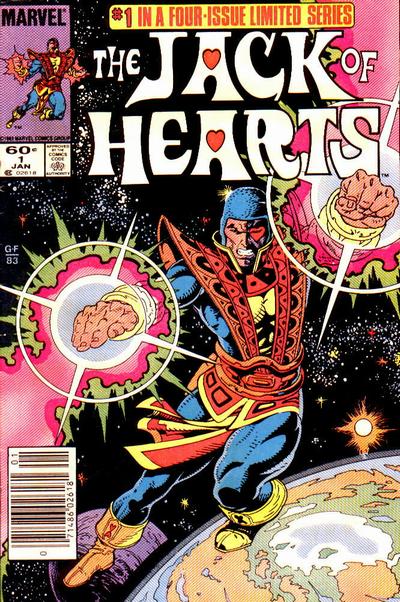 ...was revealed not in the Spider-Man titles but in the Jack of Hearts limited series published at the end of 1983, cover dated January to April 1984. I am not aware of the series having been trade paperbacked. The story was trailed by the events of Marvel Team-Up #134, which has not yet been reached by the Essentials.
(SPOILER WARNING: Since this covers a little-known limited series, even one from nearly three decades ago, this post may give things away more than usual. You have been warned.)
According to Spidey Kicks Butt writer Bill Mantlo promised at the time that Peter Parker and Marcy Kanes’s relationship ‘would be “nothing like had been seen before.”’ (Why did it have to be you Mary Jane?: Part 2 Tragedy and Rebound) However there were few significant developments, in part because of fundamental incompatibilities in their outlooks (well that was Marcy’s perspective but it was unlikely Peter would do the one thing that could correct it). Throw in a change of emphasis towards Debra Whitman when a new writer came along and ultimately we never saw the new twists promised even though Mantlo subsequently returned. In 1983 Peter “interrupted” his studies and left graduate school, totally extinguishing whatever spark there had been.
 The epilogue to those days came in Marvel Team-Up #134 as Peter cleared out his locker and said a final goodbye (for now). It was the last time most of the characters would be seen in the Spider-Man titles. But it also established a connection between Marcy Kane and the Jack of Hearts, revealing they had briefly been an item when undergraduates, before the accident that gave Jack his powers.
 The limited series goes further, adding to the backstory of Jack, with Marcy playing a surprising part. In issue #2 it is revealed that Jack’s mother was an alien, a sun priestess from the system of Contraxia. With Contraxia’s son dying, and a code of honour that barred them from taking another race’s world, the sun priestesses searched on other worlds to find a way to revitalise the sun. Jack’s mother came to Earth where she found a scientist who was developing an efficient liquid fuel called Zero Fluid that could be the solution. They fell for each other, married and had a son. But then she was killed in an accident and a replacement was sent. And that replacement was the woman known as Marcy Kane.
 Marcy, real name “Kaina”, came to observe Jack in the hope of obtaining the Zero Fluid. In the process the two fell for each other but then Jack disappeared as he was summoned home where in an incident his father was killed and he accidentally fell into the Zero Fluid, giving him his powers. Marcy then went on to graduate and then to graduate school at Empire State University, where Jack later tracked her down. By the time of the limited series she has recently graduated and comes ostensibly to help Jack cope with his powers running out of control, but wants to take him back to Contraxia to repower the sun. The rest of the series sees them go there where they get caught up in power struggles but by the end Jack succeeds in re-energising the sun then his excess power washes away much of Contraxian civilisation, forcing them to start again. Unfortunately his powers are at a level that mean he and Kaina cannot be together, so he heads off into space, leaving her to work with her people to rebuild their world. As far as I’m aware she hasn’t been seen since.
So how does all this fit into what was established before? I’ll be honest that I’m not familiar with any of Jack’s appearances from before the Team-Up issue so I don’t know how much of that side of things is a long-running mystery finally revealed as opposed to a major retcon. (However for what it’s worth Jack’s entry in the original The Official Handbook of the Marvel Universe came out a few months before this series and there’s nothing in it implying any alien connection.) But with Marcy it all feels rather forced and awkward. I can accept that after Jack disappeared she maintained her covering identity, and continued her work to either find a way to save Contraxia or find someone who could, but there’s no real indication of her having such ulterior motives in any of her Spider-Man appearances (bar a caption in the Team-Up issue). And surely if she were focusing on ways to save a sun she wouldn’t have wasted so much time on the biological side? Then there’s the issue of her hair – she says she was a blond child whose father praised her hair, and the prospect of it going brown, and then not being able to dye it, frightened her. Yet now we learn she was in disguise all the time and is a priestess in a matriarchal society (and the Team-Up flashback shows her as a brunette). Something doesn’t add up.
Part of this is down to changing writers – whilst she was introduced by Bill Mantlo who also wrote the Team-Up and the limited series, the hair revelation came under Roger Stern who probably had no idea this was where the character would end up. Did Bill Mantlo have all this planned from the outset? Peter Parker having a relationship with a girl who turns out to be an alien does fit “nothing like had been seen before”, but it’s so far away from the norm that it would have been very hard to make it work. And unless Marcy had somehow determined that Peter Parker could be the scientist to find a solution for Contraxia’s sun (which seems unlikely given the focus of his own work), then her interest in him is hard to reconcile beyond straightforward infatuation. Frankly either the plan was poorly implemented, or there was no plan at all. And I’m inclined towards the latter, though unless there’s an obscure interview with or letter from Bill Mantlo lurking somewhere we’ll never know for sure.
Now okay Mantlo had introduced Marcy in the first place and morally at least (let’s not digress into the issue of comic creators’ legal rights) had the right to take the character wherever he wanted (subject to the various Marvel approvals) but I think in this case he blundered. It’s true that Spider-Man’s graduate school days were seemingly over for good but most supporting cast members have eventually reappeared in some form or other. There was no particular need to force Marcy first into the role of Jack’s ex, then into the role in the limited series – an entirely original character could have served the same purpose. But instead a good supporting cast member was completely removed in such a way she could never realistically return for no really justifiable reason.
Marcy is not the only supporting cast member to have been sacrificed on the alter of shock revelations and the needs of individual stories, though it’s rare for such revelations to come outside the regular series (or related spin-offs). And this shows why – they get taken in very different directions from their original series and rarely did the story require it to be them. Maybe there was some further potential for Marcy had she stayed on Earth without all this, maybe not. But we’ll never know now. A pity.
Subscribe to:
Posts (Atom)