Showing posts with label Steve Ditko. Show all posts

Monday, 11 October 2021

Amazing Spider-Man Annual 22 - The Evolutionary War

Spider-Man and Daredevil team up to solve a drug wars murder but bigger plans are afoot.

Okay we've hit a publishing mistake here. The back-up feature "The High Evolutionary" has a strict chapter order and the next one should be Fantastic Four Annual #21. However the lead feature in that has the first recap of the event so far in chronological order and places it after this issue. So I've opted to publish these two posts simultaneously in lead feature order.

(And this is another annual with a lot of creators so some of the labels are in a separate post.)

Amazing Spider-Man Annual #22

1st story: Drug War Rages
By Tom DeFalco
As told to David Michelinie
Photos: Mark Bagley & Mike Esposito
R. Parker signs on
B. Sharen in the red
J. Salicrup indicted
T. DeFalco shrieks

This is the first annual in The Evolutionary War to actually build on events earlier in the saga as New York deals with the consequences of the interruption of the drugs supply in Punisher Annual #1. Otherwise this annual feels quite traditional, perhaps in part because Tom DeFalco is plotting but also Mark Bagley adopts a very traditional approach to the artwork that stands in strong contrast to Todd McFarlane's contemporary work on the regular series at this time. It's a nice suitable retro feel for a story that also resorts to some traditional moves such as Spider-Man being falsely accused of a crime and J. Jonah Jameson being delighted at being proved right. There's a team-up with Daredevil and a good use of the Kingpin. But there's also the debut of a new superhero.

Speedball was the newest hero Marvel was about to launch in his own title and he's given a preview here. But it's not a very good one. There's no origin story, just a quick mention of an "accident" that gave him his powers, and the character comes across as a mess. When Robbie Baldwin encounters a force it triggers a kinetic power that sends him jumping all over the place which he tries to use to fight street level crime. There's a half decent idea in that and with some refinement to give him a degree of control that could at least all him to walk around without being terrified of brushing into anyone it might work. But the problem here is that we're given neither the origin of a new hero when he can be expected to have difficulty controlling his powers nor an appearance once he's fully come to terms with them. To add to the problems neither his creator Steve Ditko nor his regular scripter Roger Stern is working on this story and so Speedball is just thrown into this story to bounce around without contributing much that couldn't have been handled by either Spider-Man or Daredevil.

The story focuses on the mystery of the disruption to the drug supply which turns out to be down to the High Evolutionary's Purifiers killing several distributors and dealers whilst preparing a scheme to render everyone in New York unconscious and then sterilise everyone with unacceptable DNA. Although both aims have been pursued by the Evolutionary's forces in earlier annuals it's surprising to see the same team attempting both at the same time and the result is they attract too much attention with the Kingpin forcing the details out of a captured Purifier then manipulating Spider-Man and Daredevil into attacking the Purifiers' base whilst Speedball has also stumbled across the plan. There's a good complex take on the Kingpin, concerned not merely with the immediate profit margin but also with ensuring his city is kept safe and using his resources to help the heroes where necessary. He even gets the Arranger to clear Spider-Man's name by getting the real criminal to confess to the murder of the drug distributors at the start of the story. Then at the very end he is shown expressing real concern about the wider threat. It's a reminder how he prefers the stability of the existing order and is prepared to help preserve it if needs be whereas a more simplistic villain would simply throw in with the bigger foe in town.

Overall this is a pretty good example of a traditional Spider-Man story with a double team-up thrown in for good measure. Spider-Man and Daredevil work well together and the menace is pitched at the right level for them. It's just unfortunate that space is devoted to introducing Speedball who really adds nothing to this tale and does not get a very impressive introduction.


2nd story: He who laughs...
Plotter & Penciler: Steve Ditko
Scripter: Roger Stern
Inking: Jackson Guice
Lettering: Rick Parker
Coloring: Tom Vincent
Editing: Jim Salicrup

Yes that's that Steve Ditko doing the plot and pencils. It's his first work on a Spider-Man book since 1966 - but he always refused to return to the main character and so is only drawing a back-up feature. Over the next few years he would appear in several more Spider-Man annuals in this way and so it's natural to wish he could have opted to return to the main character just one more time. Instead here is what was then his newest creation.

This could almost be from Speedball's own series which launched at this time and had almost exactly the same creative team at the start. One of the curiosities of the series is how many issues have multiple stories. There were a number of anthology titles around this time - examples include Strange Tales, Marvel Comics Presents, Solo Avengers and, over at DC, Action Comics Weekly - that offered multiple shorter stories but headed titles tended to have a single story each issue or at most a back-up story that focused on some of the other cast members in a separate story strand. Doing an ongoing headed series with multiple tales of the title character(s) was an extremely retro step.

And this story feels very retro. It's about thwarted ambition fuelling false revenge as an unsuccessful ex actor tries to murder Speedball's mother, believing she turned a director against him and so he failed to get a key break part. Now working as a janitor in a theatre he plans to attack her when she visits a friend there but first has to dispose of her son. This results in Speedball (who doesn't actually call himself by that name yet; instead he thinks of himself as "The Masked Marvel", his book's subtitle) bouncing around trying to distract and knock out the would-be killer before his mother can see him.

It's a rather weak story that's constrained by the need to have Speedball's powers triggered at key moments to advance the plot. The villain's motivation is believable but his attempts get sillier and sillier. Nor is it even resolved by the hero. Again this is not a good advert for Speedball and his series.


3rd story: The High Evolutionary: Kindred Spirits
Story: Mark Gruenwald
Pencils: Ron Lim
Inks: Tony DeZuniga
Letters: Ken Lopez
Colors: Gregory Wright
Editor: Ralph Macchio
Editor-in-Chief: Tom DeFalco

This is another info dump heavy chapter that rushes through the introduction of the New Men, with Bova, perhaps their best known member, being shown being genetically accelerated from a Guernsey cow, then more explanation about the nature of the Werewolf, though the High Evolutionary remains sceptical about the supernatural explanations, before the body of Jonathan Drew returns animated by a sixth century ghost called Magnus to explain how the spirit of the demon Cthon has been bound to Mount Wundagore and could be awakened by the Evolutionary's work. That's a lot to take in in just six pages but it does once again reinforce just how Marvel had let Wundagore get overused in far too many characters' histories so as to produce this mix of technology and magic and even Mark Gruenwald was starting to struggle to make it all seem consistent.

One thing that does stand out is that Gruenwald (or Macchio) isn't always writing the Evolutionary's dialogue consistently as an interwar British scientist. So some of his dialogue includes stereotypical upper class phrases like "old girl" whilst he also uses the American dating format for recording his experiments. More consistent is the way the way Herbert Edgar Wyndham is now wearing his armour full time as a sign of how he is retreating ever more from the outside world into a shell. The character is portrayed consistently as a rational scientist refusing to believe tales of magic even though he admits he does not understand the Werewolf. Although the amount of backstory to wade through can be overwhelming at times this saga so far has done a good job of building up the lead character.


Other material includes the plans for Peter and Mary Jane's apartment plus two unused covers by Larry Lieber & Jack Abel and Bob Layton from the black costume era and a plug for the Spider-Man newspaper strip. This annual may not be the best example of its series at the time as the latter was in quite a bold experimental phase but it's good traditional Spider-Man and a good introduction to crossover visitors as well as making good use of the event to tell a strong story. It's just a pity that it's had a new hero thrown in to poorly promote.

Sunday, 26 September 2021

"Marvel to lose Spider-Man!" What's going on?

An attempt to untangle the legal web as Spider-Man goes to court...

On Friday the news broke that the estate of Steve Ditko has filed notices to terminate the copyright transfers on the comics that introduced Spider-Man and Dr Strange and that Marvel/Disney have sued for a claim that the termination notices are invalid. In addition three other estates and a surviving creator from the early 1960s have also filed termination notices and again have been sued.

There's a lot of poorly informed commentary flying around the internet with wild claims that comics and movies are to be cancelled and anger about the various parties involved. Much of the confusion is rooted in a misunderstanding about US copyright laws and just what is actually happening. So here is an attempt to explain it all.

US copyright law has changed over time and one of the consequences is that the length of copyright terms has been extended. So when Spider-Man was created in 1962 the US copyright term was a total of 56 years from publication. This was set down in the 1909 Copyright Act (PDF). The 1976 Copyright Act (PDF) was a massive overhaul of US copyright law with many changes to the law. And there are many provisions where the situation is different for works created before the Act took effect (at the start of 1978) and afterwards.

For pre 1978 works the copyright term was extended from 56 years to 75 years. Legal creators (a term I'll come back to as these cases often hinge on how that's defined) or their heirs (tightly defined at the time) were given the right to reclaim their copyrights for the additional period of copyright by terminating the assignment (or "transfer") to another party. This termination right can only be exercised in a strict window of time around the 56th anniversary.

Later on the 1998 Sonny Bono Copyright Term Extension Act (PDF) extended the term for pre 1978 works again, this time to 95 years. It provided the opportunity to terminate the transfer around the 75 year anniversary and also widened the definition of heirs who could terminate transfers (previously only the creator, their widow/er, children and grandchildren could do so).

The principle of creators being able to reclaim their copyrights years later has a long history going back to at least the 1710 Statute of Anne in Great Britain and was present in the first US copyright law, the 1790 Copyright Act. However it previously worked on the basis of there being two copyright terms with the creator having the power to renew for a second term otherwise it would go into public domain at the end of the first term. (This is why some US works from the 1920s to the 1960s are public domain and others are not.) The renewal right was also heavily undermined by initial contracts that included the renewal rights and thus gave publishers both terms, with the US Supreme Court upholding this in a 1943 ruling. The 1976 Act is trying to undo some of this by giving the creator an inalienable termination right that can't be signed away by an earlier contract no matter what it says. Heirs also have rights now as the longer copyright terms mean that often the creator will have died by the time the relevant anniversaries are reached.

However one key problem is the definition of who is the legal creator.

The concept of a "work made for hire" is mentioned in the 1909 Act but not defined in all circumstances. A staff writer on a company salary is clearly doing work for hire. A person who writes a story and then offers the complete manuscript for sale is clearly the creator transferring a copyright. But when a freelancer is commissioned fell into a void of uncertainty with courts having to decide.

It should also be noted that prior to the 1976 Act there was very little practical difference between someone doing work for hire and someone assigning all their rights to another. In both cases the payer wound up with a copyright that they would have for 56 years and the person who did the work would get whatever payment was agreed at the time. So a lot of contracts, agreements and paperwork did not always bother to go into specifics on what seemed like hair splitting. And Marvel was not very well organised in the early 1960s, often not having written contracts and what paperwork exists did not foresee the significance of later changers in the law.

US courts developed what became known as the "instance and expense test" whereby the circumstances under which it was decided to create something became critical. The 1976 Act did include a clear definition of work for hire and required written contracts specifying something was a work for hire to be signed in advance of creation for freelancers. But this did not apply retroactively.

Marvel's early 1960s situation was litigated some years ago when Jack Kirby's heirs sought to terminate the copyright transfer on the works he created for Marvel between 1958 and 1963. However Marvel sued to stop this and every court that heard the case ruled in Marvel's favour and that Kirby had been doing work for hire. The case was submitted to the US Supreme Court but got settled privately before the Court could decide whether to hear it or not. Opinion amongst commentators is divided as to whether Kirby's heirs stood much chance of getting the "instance and expense test" overturned and Marvel/Disney settled to avoid the legal ruling or whether the decision to settle was a political/commercial one to avoid bad headlines and a battle with the Hollywood talent unions who had shown a formal interest in the case.

The precedent of the Kirby case suggests that the Ditko estate and others are not going to get their portions of the copyrights and are most likely to settle for a monetary sum. It should also be noted that even if the copyright transfers were terminated then Marvel would still hold the portion of the copyright for Stan Lee's contributions (and likely also Jack Kirby's). So Marvel/Disney would be very unlikely to lose the characters at all.

I've seen some people bringing up the cases brought by Jerry Siegel, Joe Shuster and their heirs over the Superman copyright. That situation is quite different as Superman was created in a comic strip that Siegel & Shuster had been offering around for some years before DC Comics (to use the modern name) purchased it. As long ago as 1974, an appeal court ruled that this was not a work for hire but rather a copyright transfer (although it also ruled that Siegel & Shuster had assigned their renewal rights in a previous settlement) and so their estates have been able to seek termination. The situation there was complicated by other agreements signed by the estates over the years so it doesn't offer any precedent on what may happen.

So in summary this is not a case of Ditko's heirs suddenly waking up and deciding they want a bigger slice of Spider-Man's success. Nor is it an attempt to retroactively change an agreement made in 1962. Rather this a case based on the copyright term having been extended and determining who has the right to claim it. And it is not going to stop Marvel producing Spider-Man comics and movies anytime soon.

(Oh and also watch out for all the wild claims that US copyright terms have been extended just because Disney lobbied the US Congress to keep Mickey Mouse in copyright. Disney has certainly benefited from the extensions and was one of many bodies lobbying for the 1998 Act but was hardly the only factor. A lot of the changes in US copyright law in the last 60 plus years have been driven by international developments and a recognition that as the US is now a net copyright exporter it benefits from stronger protections and reciprocal international agreements. Probably the single most important factor in the 1990s was the European Union harmonising copyright lengths to a minimum of life of (last surviving) creator plus 70 years, an increase in length of 20 years over the minimum specified in the Berne Convention. This was a length already reached by Germany back in the 1960s.)

Saturday, 7 July 2018

Steve Ditko 1927 - 2018

Steve Ditko has died.

He was probably the most reclusive creator in the history of comics but he gave us some truly amazing work that will last forever. Rest In Peace.

Friday, 3 July 2015

Essential Defenders volume 5

Essential Defenders volume 5 consists of issues #92 to #106 plus Marvel Team-Up #101, #111 & #116 and Captain America #268. Absolutely everything is written by J.M. DeMatteis bar one back-up story in Marvel Team-Up by Mike W. Barr and all the Defenders issues are drawn by Don Perlin. The Marvel Team-Up issues are drawn by Jerry Bingham, Steve Ditko and Herb Trimpe whilst the Captain America issue is drawn by Mike Zeck.

This is one of the thinnest of all the Essential volumes and by some way the shortest of the seven Defenders releases, making it all the more noticeable that it only carries fifteen issues of the regular series (even though one of them is double-sized). Half the additional issues are frankly non-essential, with Marvel Team-Up #112 seeing Spider-Man join with Devil-Slayer to battle the Serpent Men and recover an artefact from the temple of the Spider-People, whilst the rest of the Defenders are held captive. It's all rather convoluted and has no bearing on the regular series; worse still it ends on a cliffhanger that is unresolved here (or for that matter in Essential Marvel Team-Up both because that part of the line hasn't got this far yet and also because issue #112 features King Kull, a licensed character whose adventures are now restricted by rights issues). Issue #116 is a Spider-Man team-up with Valkyrie that's a follow-up both to a previous team-up with Thor and also to some revelations in then recent issues of Thor's own title that showed Valkyrie and he to have had a past together which they have now forgotten. Whilst it's hard to dispute the strong Defenders nature of either issue, especially as they're written by the same writer as the regular series, they are simply not necessary for following the ongoing storylines and feel as though they were only included here to make up the page count.

The same cannot be said of the other two extra issues included here. The Captain America issue is the first half of a two-part crossover that serves as a memorable climax to the volume and so is best discussed later. But Marvel Team-Up #101 opens the volume and quickly sets a theme that will recur throughout it. It features Spider-Man teaming up with Nighthawk as the latter comes under attack from a robot modelled on his university girlfriend Mindy, leading him to discover she is still alive. This causes the start of a long crisis of confidence for Kyle that is depicted throughout this volume as he comes to doubt himself and his successes, despite at one point literally saving the universe through the power of argument. A temporary paralysis during the daytime adds to his problems and the result is that he drifts away from the Defenders in the hope of either discovering a cure or coming to terms with his disability, finding himself and helping Mindy overcome both her mental health problems and her very mixed feelings about him. Over the course of the volume Kyle drifts in and out of the Defenders' orbit, showing how integral he has become to the group and how one can never truly leave one's friends no matter how oppressive one's own demons are.

Indeed demons are a recurring theme throughout this volume, both without and within, and it's not only Nighthawk who has to face up to them. Over the course of these issues Hellcat, Daimon Hellstrom the Son of Satan, Devil-Slayer and new character Gargoyle all have to confront one aspect of their past or another. Patsy faces up to her hatred of her mother only to be confronted with further revelations that suggest her paternity is not what she was previously led to believe and gets transformed more than once into a more literal Hellcat. Worse comes when she and Daimon Hellstrom are increasingly admitting their feelings for each other only for Satan to claim her as his daughter, making such a relationship incestuous if the claim is true - and its veracity is not settled within this volume. Daimon has to face down his father in final confrontation but in doing so discovers that despite everything his father cares for him and cannot destroy him. Giving in to his darker nature, Daimon embraces his heritage and departs for Hell. Left on Earth, Patsy rejects all dark magic, symbolically folding her Shadow Cloak in upon itself until it disappears. Daimon spends several issues trying to purge his humanity through various torments before he can be accepted into Hell but ultimately is unable to slay an innocent child and so rejects his father, who nevertheless accepts this as part of necessary balance.

The main new Defenders in the volume are Gargoyle and the Beast, with Daimon Hellstrom the Son of Satan and Devil-Slayer also returning for an extended time. Gargoyle comes with a tragic backstory, as Isaac Christians is the last of the line that founded the small town of Christianboro. As Mayor he watched the town in a seemingly permanent downward spiral and turned to black magic to save it, entering into an alliance with the demon Avarrish only to wind betrayed and trapped in the body of a gargoyle. There's a strong element of tragedy to his tale as he seeks to come to terms with both his new body and his past, whilst also slowly earning the respect of his fellow Defenders. A touching moment comes in a hospital visit when a child pulls away his disguise and accepts his appearance. Christianboro is ultimately bedevilled by Null the Living Darkness, a creature that has been manipulating the ghosts in the town. Gargoyle saves it, nearly at the cost of his own life but he is healed by the forgiveness of his family's spirits.

Devil-Slayer also arrives with backstory aplenty, starting with his ex wife's turning to a faith healer in Israel called the Messiah who has been tricked by demons from the Six-Fingered Hand. Devil-Slayer's past also comes back in another way as we learn how he came home from Vietnam only for his life to descend into ruins and he ended up a mob assassin. However his attempt to kill a reporter, Ira Fate, instead only got Fate's wife and child and now Fate wants revenge, with help from demons. In the showdown Devil-Slayer is about to take revenge for the kidnap of his own wife until he's reminded of his own responsibility for the chain of events. The Beast also shows up at the end of the volume, briefly bringing along Wonder Man when extra help is needed. Initially the Beast seeks help to restore his old girlfriend Vera Cantor from poisoning and the destruction of the Resurrection Stone, with Mr Fantastic also lending a hand to face the Giver of Life who resides within the remains of the Stone. After this, the Beast decides to hang around, finding the atmosphere of the Defenders to be the most pleasant of any of the groups he has been a part of. There are also brief returns by various past Defenders, most notably Namor the Sub-Mariner with the Silver Surfer also showing up in time for the issue #100 celebrations.

There's less of the out and out wackiness of early periods of the title but the group still finds itself caught up in many fantastical situations, starting with an adventure in which Eternity has temporarily given three parts of himself mortal existence to better understand life but now the parts are refusing to be reabsorbed despite their prolonged absence meaning the destruction of the universe. It's a tale that combines both a very traditional formula of splitting a group in three to deal with individual parts of the problem and then reunite them for the showdown with a pretty fantastical situation that is ultimately resolved by words not action. Nebulon returns in an attempt to conquer the world via a disguise to seduce Namor and use the armies of Atlantis but the ruse is soon exposed.

The major storyline involves the "Six-Fingered Hand" but instead of a literal giant hand with six fingers, it is in fact the name of a coalition of demons named Avarrish, Fashima, Hyppokri, Puishannt, Unnthinnk and Maya. Over successive issues, they put the Defenders through the wringer with a series of battles including one to restore Dracula's control of his kingdom in Transylvania. Another sees them take on Asmodeus Jones, a satanic heavy metal musician who has Johnny Blaze the Ghost Rider amongst his support crew. The Man-Thing also shows up when possessed by Unnthinnk in Citrusville as a prelude to the transformation of the whole Earth into Hell. Maya is soon revealed as being actually Mephisto, working with Satan, Thog and Satannish. This is, I think, the first time Marvel made a concerted effort to sort out the various characters who are all based on the Devil but appear under wildly different names and in varying forms, making any semblance of continuity impossible to follow. Here we have the revelation that the various demons are all separate manifestations of Satan, thus allowing each to exist separately though it leaves open the problem that particular stories and characters haven't always been clear just which manifestation appeared. The battle with the demons occupies the double-sized issue #100, with former Defenders the Hulk, Namor and the Silver Surfer all brought in to up the excitement and add to the anniversary feel.

The last main storyline revolves around Nighthawk, or rather Kyle as he appears mainly out of costume, and the mysterious agency called the Central Information Bureau that has captured Mindy and others to harness their latent psychic powers. The sinister head of the agency, August Masters, takes steps to manipulate Kyle's life by both ending the long-running government investigations but also preventing any meaningful action being taken in time against the C.I.B. The climax comes in a crossover with Captain America as most of the Defenders and Cap get captured with Masters revealing himself as a rogue "patriot" seeking to start a new world war by using the psychics to attack the Soviet Union. With the aid of Daredevil the remaining Defenders come to rescue the others but the C.I.B. base's self-destruct sequence has been activated and Kyle winds up using the psychic powers to save his fellow heroes but at the cost of his own life. The final page showing the other heroes alive but realising Kyle is not makes for a truly sad ending to the volume but a point of final redemption for Kyle.

This volume encompasses a fairly dark period for the Defenders with a clear emphasis on character building and demon confrontation over and above the out and out bizarre and wacky situations that have been more prevalent in earlier years. But it shows a strong grasp of the main characters whilst at the same time effortlessly absorbing the likes of Gargoyle or Devil-Slayer to make them feel completely at home in the title. Although some of the group members are not given the strongest of attention here, making the Marvel Team-Up issue's throwaway references to Valkyrie and Thor's shared past frustrating as they're not explored here, each of Nighthawk, Hellcat, Daimon Hellstorm the Son of Satan, Devil-Slayer and Gargoyle gets a strong character arc that explores what makes them tick, shows them confronting their past and/or their heritage and making each of them a much stronger character as a result. The situations and threats function well to advance these developments, making for a very strong and coherent volume. It's just a pity it's padded out by two Marvel Team-Up issues that are at best unnecessary and at worst irritatingly for what they leave out. Otherwise, this is one of the best periods for the Defenders.

Friday, 13 March 2015

Essential Tomb of Dracula volume 3

Essential Tomb of Dracula volume 3 consists of issues #50 to #70 of the regular series and #1 to #4 of Tomb of Dracula Magazine. Almost everything is written by Marv Wolfman and drawn by Gene Colan bar one issue of the Magazine which is written by Roger McKenzie and another which is drawn by Steve Ditko.

The volume opens with a fairly well known encounter with the Silver Surfer as he gets caught up in the internal machinations of the satanic cult that Dracula now heads. It's all rather underwhelming and certainly not the great classic of legend, an early warning sign that perhaps Marv Wolfman and Gene Colan are starting to run out of creative energy. This feeling persists through the next several issues as other elements are hurried through such as the quick dismissal of Blade's doppelganger but fortunately there's a distinct upturn as the series heads towards its climax.

There are a few other guest appearances on the way with mixed impacts. Topaz, from the Werewolf by Night series, pops up as a tool of a very particular foe who wants Dracula lured to a special location. Daimon Hellstrom the Son of Satan shows up for an issue in order to resurrect Blade and free him from his doppelganger. Hellstrom doesn't hang around for the final showdown with Deacon Frost after which both Blade and Hannibal King broadly depart from the series with their mission of vengeance complete, though Blade shows up later in an issue that feels like it's a standby fill-in as Blade and Musenda reunite to save a woman from an odd curse that links her to a vampire, alternating between day and night. Also reaching completion is Harold H. Harold as he finishes his novel about Dracula, which is also adapted as a play and, potentially, a film, and he finally gets to go on a date with Aurora. He later appears at a showing of the play having convinced an actress he can get her a part in the film but Dracula is also in the audience and it doesn't go well for Harold.

One of the key themes of the volume is religion, with Dracula's position as head a satanic cult leading to encounters with both those from below and those from above. Early on, a mysterious being confronts Dracula only to die in the event but his spirit rises and it becomes clear he is connected to Christ via a portrait with glowing eyes. It's a very bold move to all but explicitly say that Dracula has encountered an angel, but it's also one that makes perfect sense given the power Christian artefacts have in vampire mythology. Later on, Dracula's son Janus is resurrected and artificially accelerated in age to that of a young man through fusion with the angel's spirit. And this leads to a confrontation that fuses both of the biggest themes.

The other big theme of the run is that of families, although there isn't much exploration of the most prominent direct relationship between Dracula and his descendant Frank Drake. Instead the emphasis at one end is on Rachel van Helsing and her relationship with Quincy Harker, as her father figure suffers a succession of heart attacks and becomes ever more desperate to complete his mission before his health finally gives out. Meanwhile Dracula is almost domesticated, now married to the cultist Domini and seeing a son, named Janus, born on the night of December 24th. In a display of a story element I have never liked in comics published at Christmas, Janus's birth brings peace and goodwill to the vicinity, causing the immediate fighting to end and foes to let one another go. Janus also brings joy and peace to both his parents, who reflect upon their pasts of loneliness and awkward relationships with the rest of their families. But families come in many forms and not all relationships are in good form. Dracula has a further encounter with his daughter Lilith but she will do nothing to help him in his most desperate hour. The Church of the Damned cult is another form of family but one with internal hatreds as Anton Lupeski plots to overthrow and destroy Dracula, now that the birth of a son means the vampire is no longer needed. In the showdown tragedy strikes when Dracula evades the bullet and it instead kills Janus. Lupeski is soon disposed of but Domini calls an end to the immediate violence, channelling the painting of Christ. Subsequently she performs a ritual that resurrects Janus in fusion with the dead angel's spirit, and the result is a young man torn between filial duty and a destiny to kill Dracula.

This leads to confrontations between father and son but before long both are lured to a strange recreation of a Roman arena, along with both Frank Drake and Topaz, where a demon tries to get Dracula and Janus to fight to the death but fails and they instead turn on the demon. Dracula then finds himself transported to Hell where they encounter Satan himself. Satan toys with Dracula, turning him into a human once more and casting him back into the world where both he and the vampire hunters now face a very different set of circumstances and morality. He now wanders the Earth discovering he now has the all too mortal concerns of money, food and injury to cope with whilst they must question whether they can kill a human man who is no longer a threat. But there's one hunter known as the Cowboy for whom the answer is clear-cut. Dracula continues on a quest to be restored to vampiredom, but is spurned by the only vampire he deems worthy to transform him, Lilith. Dracula then turns to Janus and persuades his son to send him to the one place where he might find restoration, Transylvania. But here too he finds rejection as his subjects and vampires now serve a new master, Torgo, and reject Dracula for having turned his back on the old ways. In turn Dracula is forced to embrace his foes even more as he turns to God for help and crucifixes for protection, but it's all the manipulation of Satan who has done all this to break him. Dracula is restored to vampire form as the climax of the series looms.

The finale sees Dracula confront Torgo, who was transformed into a vampire by the same woman as Dracula, leading to a battle to reclaim lordship over the vampires. But it's a hollow victory as Dracula contemplates just what it is he rules over and then comes the real showdown. Quincy Harker is dying and confronts Dracula one final time in the castle in Transylvania in vengeance for his wife and daughter. It's a dramatic climax to the series and Quincy is the natural choice for the final battle; however there's a loophole left open when explosives in Quincy's wheelchair detonate before he can take the correct ritual steps to destroy the corpse. All that is left is for Quincy's final letter to help Rachel rediscover herself, whilst Janus is unmerged from the angel and restored to infant form. The series ends with a look back at the man that Dracula was.

This is one of the rare cases from the era when a title was given enough warning to enable it to wrap up the story within its own pages; imagine the awkwardness if such an intense and involved conclusion had to be rush packed into a single issue of Marvel Two-in-One. There's a real sense of closure as Dracula is restored to his former glory just in time for the final showdown, whilst hope for the future is left with the surviving cast members. If the story of Marvel's Dracula had ended here it would have gone out on a truly spectacular high. However it turns out this wasn't quite the ending of the title that it at first seems but rather a clearing of the deck for a change in format.

The switch to a black and white magazine format is a surprise; it seems there was another attempt by Marvel to drive into the horror magazine format. If the colour comic was cancelled for this reason then it was in vain. The four magazines reproduced here (minus some back-up stories not featuring Dracula) just show a rambling chaos as Dracula is once more revived in a confusing tale of magic and gets caught up in a mixture of tales that owe more to Lovecraftian monster horror or the film The Exorcist than to the traditional gothic tales. Nor does the classic creative team survive long. Issue #2 is drawn by Steve Ditko but his style is just all wrong for the mush mash of content, being far too traditional cartoony for a tale of Satanists, demonic possession, a monster impregnating an innocent woman and her brother becoming an incubus, draining the life forces of others and turning into a visual link to a psychedelic dimension. Another story tells of a woman surviving having her blood drained by Dracula and later giving birth, only for her daughter to somehow remotely drain Dracula's blood supply and act like she is possessed. A back up is told in the pictures and text caption format from the perspective of an art dealer as he relates how a promising young artist full of hope and optimism was drastically changed by an encounter with Dracula. Although there are some recurring themes of women being twisted and broken, there is no clear direction with the group of vampire hunters now separated and scattered and only a brief appearance by Inspector Chelm of Scotland Yard to even hint at any recurring adversaries for Dracula. And then after three issues Wolfman leaves the title. His immediate successor is Roger McKenzie who goes back to the gothic roots of the character but at the expense of chronology by telling a tale of Dracula preying on a family living in a lighthouse in the early twentieth century. Although the magazine continued beyond this volume, the material here just shows a great waste of an opportunity as the title stumbles around with no clear identity or direction. Wolfman had had an incredible run on the colour comic, writing no less than sixty-four consecutive issues without interruption and giving it a strong identity and direction, so it's a pity that his final stories are such a forgettable mess. Colan's achievement of drawing all seventy issues is even more impressive and so it's a shame that for whatever reason the magazine stories weren't all drawn by him or that the alternative art just wasn't suitable for the series's style.

Ideally this volume would have ended with the end of the colour comic and left the magazines for another day. Or else Wolfman and Colan would have left the character at this stage and gone out on a high. This would have left this third volume as a return to greatness, overcoming the turgidness both in the earliest issues here and in the second volume, and restoring the series to a high point in time for the climax. Unfortunately the magazine stories undo all this good work, see the character resurrected all too quickly, Wolfman leaving at a bad low and the volume itself ending midflow. Normally the Essentials are constrained by page lengths that give limited manoeuvre for choosing end points but the first three volumes came out in the space of barely eleven months and it should have been possible to pace them so that the third ended with the end of the comic and kept the magazines back for the fourth. Instead the end of this volumes just crashes down after all the good that came before it.

Friday, 12 December 2014

Essential Doctor Strange volume 3

Essential Doctor Strange volume 3 collects issues #1-29 of his second series plus Annual #1 and the crossover issues of Tomb of Dracula #44-45. Bonus material includes Official Handbook of the Marvel Universe entries for Doctor Strange, his Sanctum Sanctorum, Eternity and Dormammu, plus a pin-up of Doctor Strange and Dracula from a Marvel calendar and an extra page used in a previous reprint of Tomb of Dracula #45. Most issues are written by Steve Englehart with shorter runs by Marv Wolfman, Jim Starlin and Roger Stern, and individual writing or plotting contributions by Frank Brunner and Roy Thomas. The art sees runs by Frank Brunner, Gene Colan and, right at the end, Tom Sutton, plus other contributions by Alan Weiss, Alfredo P. Alcala, Rudy Nebres, Dan Adkins, Jim Starlin and Al Milgrom. One issue sees a framing sequence around a reprint of Strange Tales #126-127 drawn by Steve Ditko and scripted by Stan Lee. The annual is written by Englehart and co-plotted & drawn by P. Craig Russell whilst the Tomb of Dracula issues are written by Wolfman and drawn by Colan. That's a lot of creators so there's a separate post for some of the labels.

Doctor Strange is a character and series that a lot of writers have struggled with over the years. Some seem to have very little idea as to what to do with the character beyond yet more rounds of battles with the likes of Baron Mordo, Dormammu, Nightmare and other foes from the original stories along with yet more encounters with Eternity for the sake of it, continuing to wallow in the legacy of Steve Ditko and Stan Lee but only really offering more homages of the same old. Others try to ignore all those elements and instead thrust the good doctor into new environments, taking him away from all of that but again it can be ultimately unsatisfying. Part of the problem is the lack of clarity around Doctor Strange's powers with his power level especially volatile to the point that stories can be resolved with deus ex machina endings. It's unsurprising to find that in this volume there are multiple attempts to contain his power, whether by temporarily depowering him whilst in a specific environment or else overtly trimming his wings when he gives up the role of Sorcerer Supreme, although he gets it back later on under a new writer.

The early issues do a lot for the mythology with the introduction of Silver Dagger, the fanatical ex-Cardinal who has become on of Doctor Strange's most recurring of foes, but otherwise we get an epic retread of familiar themes. But there's a real effort to build on what has come before rather than merely retelling the same kind of adventures. There's a return of Dormammu but as a reincarnation no longer bound by his previous vow to spare Earth and so opening up new dangers. At the same time we learn a great deal more about the Dark Dimension including the revelation that Clea is the daughter of Umar and Orini, and thus the true heir to the throne. Elsewhere Doctor Strange is thrust into the Orb of Agamotto and into the realm where he encounters Agamotto himself. (Although he is not yet explicitly named but it's pretty clear who this giant caterpillar is meant to be.)

There's a growth in the cosmic elements and a willingness to both define and shake up the universe, seen most obviously in the encounter with the personification of Death. Here the entity is presented as male though the female presentation would subsequently come to be the norm. Death and Eternity are now set out as the two fundamental forces in the universe, marking the very brief start to attempts to rationalise the many different seemingly all powerful cosmic entities who have shown up in Marvel comics over the years. Such is the boldness on the cosmic scale that the end of issue #12 sees the Earth itself destroyed by Mordo's madness. And it isn't an illusion or reversed but instead the planet is recreated by Eternity, with accelerated evolution to restore it to the exact moment. However Doctor Strange has to live with the knowledge of what happened, that everyone around him is a duplicate whilst he is the sole survivor of the original planet.

It's surprising just how close to modern religion this run gets. There's explicit acknowledgement of God and where He sits in the cosmic hierarchy with Eternity clearly below him. Later Doctor Strange battles a being who is presented explicitly as Satan. Although he acknowledges other names such as "Lucifer", "Mephistopheles", "Beelzebub" and "Old Nick", there is nothing here to suggest that he is in fact one of the many demons. Truly the Devil is the most inconsistently portrayed character in the Marvel universe.

One of the recurring themes sees Doctor Strange thrust into a variety of worlds in which he encounters aspects of himself and/or his life. One of the most memorable comes in a realm populated by duplicates of Stephen though the ruler is masked. And it seems Steve Englehart's hostility to Richard Nixon continued unabated even a year after the resignation because the ruler is hiding behind a Richard Nixon mask.

This mixture of the fantastic and the personal works well with some good development of Clea. She and Stephen demonstrate a mixture of uncertainty and disagreement over exactly what their relationship is, though given the age of these issues it's surprising that they're all but actually showing us the couple sleeping together. (For that matter the flashback depicting the one night stand between Clea's parents, Orini and Umar, is also quite close to explicit.) The two aren't always on the same wavelength about when they are being master and disciple and when they are a couple, leading to some unfortunate moments. Clea's insecurities are played on by a number of beings, and ultimately she is subjected to a spell by Xander that leaves her amnesiac and angry, attacking even Doctor Strange. Although the spell is short-lived and Clea soon returns to Stephen's side, it's clear by the end of the volume that there are still issues to resolve.

The United States's bicentennial is marked with an aborted saga called "the Occult History of America" in which Doctor Strange and Clea travel through the nation's history to investigate Sir Francis Bacon's New Atlantis. In the course of the journey they encounter Stygyro, who is presented as the perfect contrast to Strange, being a long-lived and powerful sorcerer from a previous era, travelling across the ages and even seducing Clea whilst in the form of Benjamin Franklin. Unfortunately both the saga and Stygyro fall victim to changing writers, with the Occult History hurriedly abandoned whilst Stygyro later turns up as one of the Creators. The Creators are the main focus of the rear of the volume as they and their agent Xander work to undermine Doctor Strange, even manipulating him into decisions that remove the Sorcerer Supreme title from him. They are a group of sorcerers working with the In-Betweener to reform the universe through the odd method of swapping places with the stars and remoulding the now human stars in their own image. At one stage the Earth has become a place occupied by anthropomorphic animals, including the boar Doctor Stranger Yet who provides for an interesting confrontation between the two counterparts. The epic climaxes in a showdown with the In-Betweener at the Wheel of Change.

The annual serves as a side-step from this storyline as Doctor Strange hunts for Clea but gets dragged into a power struggle in the realm known as Phaseworld, where the Empress Lectra battles both her sister Phaydra and the angel Tempus. However the revelation of Lectra's lies and illusions in luring Stephen ultimately result in the destruction of the whole realm and all who live within it. It's a curious little tale but ultimately it doesn't amount to much and it's easy to see why it would later be rewritten as the 1990s one-shot Doctor Strange: What is it that Disturbs You Stephen?

The crossover with Tomb of Dracula may be significant in the long run for the first interaction between the two lead characters but here it feels like a step out of the comfort zone and into a crossover for the sake of a crossover. It doesn't add much to either series and feels like it was done just to boost sales on the weaker selling title, though I'm not sure which one that was.

This run shows a few deadline problems that led to reprints; oddly both of the original stories are included in full here. In issue #3 Doctor Strange is on a journey through the Orb of Agamotto to confront Death and remembers the events of how he first met Clea and Dormammu. Here there's a brief framing sequence to tie things together, with the final page combining both modern and classic material so it would have been hard to present just the frame as sometimes happens when the Essentials come to a reprint issue. Still it's a surprise and delight to see a Ditko-Lee story again even if the contrast between the original artwork and the-then modern style is all too clear. Issue #21 sees a reprint of "The Coming of... Dr. Strange" from issue #169 of the previous series. It's odd that it's included here as the story is presented straight up as a reprint without any effort to incorporate it into the ongoing narrative. Due to a reduced page count a bit of the story has had to be trimmed and, using volume 2 side by side with volume 3, it's possible to compare the two to see what has been change. Most of the loss is in individual pages but occasionally two pages have been cut up to produce one condensed version. As the most substantial version of Doctor Strange's origin to date it's easy to see why it was chosen but it's harder to understand why it was included in this reprint volume unless someone in production failed to spot it was a reprint until it was too late.

Another issue that feels like a deadline problem is #29 which carries a team-up with Nighthawk as they battle Death-Stalker, the old foe of Daredevil. The whole thing feels odd and a little out of place in the run despite being by the regular creative team. Either this was an attempt by a newish writer to go in a different direction from before or else it was prepared as an emergency standby that could fill-in a gap in either this series or the Defenders. Either way it's a rather unsatisfactory ending to it all.

Overall this volume is solid but not always the strongest. The first two thirds show a good attempt to combine the traditional Doctor Strange mythology with some new elements and new takes on the existing ones, and it broadly works to make the series interesting. However there's still some repetition of themes and it continues in the last third of the volume which shows all the signs of multiple writers struggling with the situation they have inherited, with some going in a clearly different direction from what was previously planned, and the result is an unsatisfactory mess. Doctor Strange is a tricky series to get right so it's a pity when such periods don't last for longer.

Friday, 6 September 2013

Essential Iron Man volume 1

Monday sees the release of Iron Man 3 on DVD and Blu-ray. So it's a good time to take a look at his earliest adventures.

Essential Iron Man volume 1 contains the Iron Man strips from Tales of Suspense (another anthology series that later also featured Captain America) #39-72. All but one of the issues are at least plotted by Stan Lee who scripts most of them, with the debut issue scripted by Larry Lieber followed by seven scripted by "R. Burns" (Robert Bernstein) and a couple later on by "N. Korok" (Don Rico). Issue #68 is the Lee-less exception, written by Al Hartley. Most of the art is by Don Heck with three issues by Jack Kirby and two others by Steve Ditko. A bonus feature at the end highlights a couple of earlier versions of covers that were either used on different issues from the ones they seem to have been commissioned for or else which saw the villain's name changed, probably to comply with the Comics Code Authority.

Of all the main early Silver Age Marvel characters, Iron Man has long been one of my least favourites. I only seemed to pick up his series because of various crossovers and the "family" grouping of various titles and it often failed to inspire me. He was also absent from the main Avengers for some years when I started reading it. Perhaps it's because without the tragedy of Tony Stark's heart being kept going by a chestplate - and in those years he'd solved it with a transplant - and with his drinking problems largely conquered, what was left was a successful playboy businessman who had it all but suffered an obnoxious attitude. Now that may be a caricature but we are talking about the era of Force Works and the Crossing (I must have been one of the few readers of that latter saga whose biggest gripe was that Iron Man felt like an intruder on the current Avengers). However there must have been something that made the character popular in the first place and this volume was a revelation in showing what that was.

Who created Iron Man? It seems to be another case of multiple parties involved in coming up with the first issue and cover and most of them having bad memories. Jack Kirby drew the first cover and designed the armour; this seems to have predated the drawing of the actual strip which was entirely by Don Heck. Stan Lee came up with the plot but deadlines prevented him from scripting the issue. But all of that doesn't state for sure where the basic idea came from out of whatever conversations between whichever combination of Heck, Kirby or Lee. However Lee and Heck are the main forces on these early adventures, a rare series from the time without much involvement by Kirby or Steve Ditko. It's common to talk of Kirby and Lee as the Lennon and McCartney of Marvel comics. Does that make Ditko the George Harrison? Martin Goodman the Brian Epstein? (After all both Goodman and Epstein negotiated some terrible deals that paid the artists little.) And if such comparisons hold up, does this make Don Heck the Ringo Starr? Heck's artwork is often overlooked but he brings a clear distinctive style that manages to simultaneously show Iron Man's armour as big and tough but also dynamic enough to move and fight as needs be.

Has any Marvel Silver Age origin dated more than Iron Man's? It's relatively easy to fudge a minor detail in some of the others - the Fantastic Four could have any particular goal in space or the Hulk could be the product of weapons testing for any purpose (although replacing Communist agents with Skrull agents is perhaps not the best solution to one aspect) - whilst others are even more timeless - an arrogant surgeon trying to heal his hands by any means possible or a doctor discovering aliens and a magic weapon whilst on holiday just don't date at all. But Iron Man is different. It's hard to fudge away the jungle war Tony Stark is producing weapons for, or transform the Vietnamese guerrilla leader Wong-Chu into a non-Cold War figure. Later retellings have done what they can, but reading the original story it's much harder to filter out the dated elements. The story itself is straightforward though I do wonder why the North Vietnamese aren't monitoring Tony and Professor Yinsen more closely. It also shows a ruthless side to Iron Man that would be later toned down (give or take certain stories such as the Crossing) when he uses his oil and fire tools to ignite an explosives store and kill Wong-Chu. Now yes there is an armed conflict going on - I'm hesitant to use the term "war" for the United States's role during this period in Vietnam (early 1963) - but here we see the approach of a de facto soldier rather than the more traditional morality of a hero aided by a writer who usually finds some accident to permanently end such a foe.

However Iron Man's portrayal and personality is much more sympathetic than I was expecting. Tony Stark's life shown here focuses very much on his business and scientific concerns, with the playboy element rather sidelined, and the character is much more likable as a result. He may have his moments where he can appear dismissive or cruel to others, but we're never left in any doubt that this is because of his dedication to doing right as Iron Man and preserving his identity. But I do have to wonder if Stan Lee grew up being cruel to women as his well-meaning way of putting them off, as this is yet another series where the hero tries to discourage a woman's interest in him by pretending to be a nasty piece of works. It is repeatedly emphasised that Tony is trapped by the damage to his heart and reliant on his chest plate which could give out at any moment. When the strip began, the world's first heart transplant operation was over four years away and pacemaker technology was in its early stages. So it was credible that Tony had no real option but to rely on his chestplate to support his damaged heart (ignoring the science fiction and magic that meant the Marvel universe contains many healers who could have fixed it, though none appear here). Though the adventures were published in a time when comics were more chaste than now, the problem facing Tony if he ever wants to be intimate with somebody are all too clear.

After the first several issues feature no real supporting cast at all, issue #45 introduces the first two other significant cast members in the series - "Happy" Hogan and "Pepper" Potts. Happy Hogan is an ex-boxer who saves Tony's life when a racing car crashes, and is given a job as Tony's chauffeur. He rapidly proves quite loyal to Tony and is drawn to Pepper, but at first she has eyes elsewhere. Pepper Potts is another example of the working woman who falls for a man in her office, but is frankly rather cliched. In her first appearance on her first page she tells Happy of her attraction to Tony even though he doesn't know it "but some-day he will ... and then he'll give up all his actresses and debutantes... and I'll become Mrs. Anthony Stark!" By today's standards it's not exactly the best ambition to give the leading female character. It gets silly in one issue when she lies to Tony's date for the evening and pretends he's stood her up, in the hope he will take out Pepper instead. (He doesn't - he instead gives the tickets to Happy to take her.) Issue #50 sees her get a makeover in the hope of getting Tony to notice her. Is the message that a woman is only worth her looks? Pepper is freckled, a trait I share, yet her makeover includes covering them up. Again this is not the best message to send. We get a romance triangle between the three, a not uncommon arrangement, but on this occasion the hero feels he cannot have the woman and does what he can to push her Happy's way, even though it hurts him when he realises how much Happy means to Pepper. The volume ends with the situation reaching a climax when Happy, who has deduced Iron Man's identity, is nearly killed getting a vital weapon to him. Tony's absence and seeming disinterest upset Pepper and it seems she will finally choose Happy. The other main supporting cast member is Senator Byrd, presumably no relation to any real life Senators with that surname. A strong critic of Stark, he feels a playboy is unsuited for essential defence contracts and assumes the sabotage at the plants is the work of Stark himself, who may be a communist spy. A more minor character introduced at the end of the volume is Stephanie, the Countess De La Spiroza, one of Tony's many old flames who is angry at being stood up.

The early issues contain some surprising contradictions from other Marvel titles of the time. We get a character called Dr Strange - but he's a villain and no relation. We discover that Atlantis had sunk into the seabed and become an underground kingdom - rather than existing on the seabed as in the Fantastic Four stories. Maybe Robert Bernstein was Marvel's answer to Bob Haney, never letting continuity get in the way of a good story. Or maybe the concept of the Marvel Universe as an integrated whole didn't come together until a little later, and we're seeing the older pattern, more often associated with DC, of each individual series developing its own continuity and mythology without due regard for the rest of the line. Stan Lee's prolific scripting would have served to limit many of the differences (although he wasn't above forgetting individual points), but other scripters may have not felt bound to match series they weren't writing. The first sign of the wider Marvel Universe comes in issue #49, after Lee has taken over the full scripting, when we get a fight between Iron Man and the Angel of the X-Men with the rest of the team appearing. This is also the fist issue to reference Iron Man's membership of the Avengers. The first villains from another series to appear are the Chameleon and Kraven in the Hunter (both from the Amazing Spider-Man) in issue #58, followed by the Black Knight (from the Giant-Man strip in Tales to Astonish and also the Avengers), Attuma (from the Fantastic Four but also appearing in a number of other titles by now), Count Nefaria (from the Avengers) and the Mad Thinker (from the Fantastic Four).

But the series also debuts many new villains, though quite a few of them have been largely forgotten. Wong-Chu is generally only recalled for his role in the origin and others include Gargantus, the aforementioned Dr Strange, the Red Barbarian, the Actor, Kala Queen of the Netherworld (well actually an underworld), King Hatap the Mad Pharaoh, Mr Doll, the Phantom and Weasel Wills. But there's also the debut of several of Iron Man's better known foes including Jack Frost (although he would later adopt a different codename), the Crimson Dynamo (no less than two incarnations appear here), the Melter, the Mandarin, the Scarecrow, the Unicorn, Morgan Stark and the Titanium Man. We also get the first appearances of two villains who would soon switch sides. The Black Widow starts off as a femme fatale using her wits and looks to secure her objectives rather than an Emma Peel type female action agent, though after a year's worth of issues she undergoes intense training and becomes much closer to her more familiar modus operandi. Meanwhile Hawkeye begins life as an entertainer who is inspired to put his skills to other uses by seeing Iron Man, an origin detail shared with the Scarecrow, but on his first attempt to foil a crime he is mistake for an accomplice by the police and flees, then gets recruited as an ally by the Black Widow.

Amongst these foes there are a number of stock types seen in many other early Silver Age Marvel stories. Gargantus is a robot used by this series's set of aliens seeking to conquer Earth, and as with so many of their counterparts they decide again after assuming the hero they encounter is a typical example of the planet's inhabitants. The Actor is a master of disguise who can fool anybody, although he has more developed powers than the Chameleon did at the time. Kala is the ruler of a civilisation beneath the Earth's surface. Meanwhile the Mandarin conforms to a stereotype from broader fiction - the tall, specially skilled, evil Oriental criminal mastermind - at one point Iron Man even calls him an "imitation Fu Manchu". And he's not the first Marvel supervillain in this mould though I doubt many of the original audience could remember the Yellow Claw who had a very briefly lived series some seven years earlier. Another influence may be the Bond villain Dr No - both he and the Mandarin have half-Chinese, half-European parentage and, in the Bond novel at least, were raised by aunts. And, this time as in the film, the Mandarin is explicitly stated to be an independent operative with little care for the political conflict around him (though he's not adverse to working for hire for the Chinese Communists) so he has the potential to outlast the Cold War. There are indications that the Mandarin will become Iron Man's archenemy but at this stage he has to outlast a surprising competitor.

The origin story may have dated badly but so too has another aspect of this story. There is a lot of anti-Communism, on a scale far greater than just about any other Marvel series. Both the Soviet Union and China are behind a number of villains and there are many attempts made to neutralise either Tony and/or Iron Man. Maybe it was natural that a hero who is a successful businessman and weapons manufacturer would be the automatic counterpoint, but there's very little actual explanation as to what Communism actually is beyond a banner unifying the Soviets and Chinese. Occasionally the words "freedom" and "democracies" are used to describe the West but otherwise the Communists could frankly be just about any state declared the enemy of the day. Khruschev himself appears in the strip from time to time, although he's not explicitly named when appearing on panel but sometimes referred to or called "Comrade K" or "the 'Mr. Big' of the Iron Curtin". Was this a way of sidestepping legal action? Whatever the reason, the leading Communist is shown personally ordering actions against Stark and/or Iron Man, threatening the Black Widow's parents in order to bring her loyalties back in mind and worrying about any agents growing in popularity. Issue #64 demonstrates one danger of this approach as it appears to have been drawn before Khruschev's fall but was scripted afterwards and has to establish that the Black Widow was given her training and orders before the change in the Soviet leadership. Wisely Brezhnev is never shown after this.

How come almost nobody figures out Iron Man's identity? It isn't until issue #56 that it's established he has the role of Tony Stark's bodyguard. Before then Iron Man is presented as a friend of Tony's but he shows up all too quickly whenever the factory is attacked. Iron Man is very free with first person pronouns when speaking about Tony's property, but nobody picks up on this. Happy eventually guesses why Iron Man and Tony are never seen at the same time, a coincidence that eludes everyone else, but is wounded before he can explain just how he spotted it.

Overall I was surprised at how enjoyable this series is. It may be heavily dated with all the Communists and references to Vietnam, and I'd be fascinated to see how latter day retcons and reimaginings have tackled that problem, but the central character is a much more sympathetic and likeable person than he's been portrayed at times in later years. Nor does he come across like a Batman clone - they may both be rich playboy businessmen but very different aspects are emphasised and so Iron Man feels like a legitimate alternate take on the archetype rather than a knock-off. Don Heck has been unfairly neglected but this volume shows how good his work was and together with the writing the series holds up quite well today.

Friday, 23 August 2013

Essential Hulk volume 1

Essential Hulk volume 1 contains, in the original edition, all six issues of the original Incredible Hulk series and then the Hulk strips from issues #60-91 of Tales to Astonish (the anthology series that also starred Ant-Man/Giant Man and which later featured Namor the Sub-Mariner). Everything in the volume is written by Stan Lee. Jack Kirby draws the first five issues before being succeeded by Steve Ditko who carries on into the early Tales to Astonish stories. Kirby then returns for a few issues before switching to do layouts which are finished by a mix of "Mickey Demeo" (Mike Esposito moonlighting whilst at DC), Bob Powell, Scott Edward, John Romita and Bill Everett, then issue #84 is credited to "Almost the whole blamed Bullpen". After this (and probably not coincidentally) we get full pencils from John Buscema and Gil Kane. Later editions have added the Hulk's guest appearance in the Giant-Man strip in Tales to Astonish #59 (written by Stan Lee and drawn by Dick Ayers) which served as a trailer for the Hulk's own strip. (This strip can also be found in Essential Ant-Man volume 1.)

This is literally a volume of two halves albeit unequal ones. The first consists of the original Incredible Hulk series that lasted just six issues back in 1962-1963. Reports are divided as to whether it actually a poor seller or if it was just a victim of Marvel's limited number of titles due to its distribution deal and displaced by Sgt Fury and his Howling Commandos. But either way the result was that the Hulk soon lost his own title and was relegated to wandering through the pages of other books such as the Fantastic Four, the Avengers and even the Amazing Spider-Man. Then after about a year and a half without his own feature, he was given a slot in Tales to Astonish.

This disjoint in the early years has often affected how they've been viewed. The original six issues have been reprinted many times - a pocketbook reprint lent to me by a friend many yeas ago was the first time I read any Silver Age Marvel stories (but I honestly can't remember what colour the Hulk was in the first issue) - but there's been much less attention given to the Tales to Astonish strips. Indeed a note at the start of the original edition of this volume specifically states that many of them hadn't been reprinted "since... well, even Stan Lee can't remember when!" (The Masterworks didn't start on them until a few years later.) It's apologising for the variation in reprint quality due to the nature of the archival material, but it's also a reminder that the Hulk entered his first forgotten era earlier than almost any of his contemporaries.

(The reprint quality is more than passable though. Indeed the worst looking page in my edition is actually one with 1990s artwork! It's a divider page between the two series with the front and back cover art on either side. Unfortunately one side seems to have the images overlaid on each other, like a double exposure. Later editions have better reproduction and lack the note.)

The Hulk's origin story is mostly timeless but there's one element that has bcome dated. Scientist Bruce Banner develops a powerful bomb emitting a special kind of radiation but gets caught in the blast of an undelayed test whilst saving a teenager who has wandered onto the site for a bet, and the resulting energy causes him to change into a monster - that's pretty easy to map to any era. Yes there's a bit of silly science about the effect of the rays. The arms race may have been a more prominent factor of the Cold War but even today nuclear weapons are a live and argued issue and it doesn't matter if it fits current US weapons testing policies. It's the presence of a Communist agent amongst the test staff and the interest of the Soviets that makes the first issue a little dated, though one could reasonably airbrush Igor into being a generic foreign spy of an unnamed or fictitious country. (Making him an alien infiltrator in disguise might be simultaneously timeless and also true to the spirit of some of the era's science fiction but... well... "Yeeesh!") The origin is retold in issue #3, for no real purpose (unless it was to fill up the page count), but with all the spy elements removed.

There are some other aspects to the series that show the silliness of the time, most obviously the way that Bruce is able to obtain a lot of scientific equipment on the sly and easily assemble everything from a gamma machine to the door to the Hulk's underground prison, with a ten foot thick concrete slab held in place by a steel rod. Later on Rick Jones is able to obtain and install a replacement rod with no-one noticing. And there's one issue where Rick is able to charter a private plane at only a few minutes' notice to fly him and the Hulk to confront the latest villain.

One thing rapidly becomes clear that there didn't seem to be a strong sense of direction for the series. At first we get the tale of a man who transforms into a brutish monster at night - a latter day take on Dr Jekyll and Mr Hyde, or at least the popular impression of it. But this doesn't last and soon we shift towards the scenario of the Hulk being a mistrusted hero and Bruce controlling the transformation through a gamma ray machine. However issue #6 shows signs that the control is beginning to break down with delayed and incomplete transformations and then signs that the change can be brought on by extreme aggression. Issue #6 also sees the Hulk granted a Presidential pardon, suggesting a further shift in direction but the run ends before we can see where it goes. The Hulk's personality is initially that of a simple giant but midway through Bruce gains control of the monstrous form. However there are signs that either Bruce is losing control to the Hulk's personality or else he is changing with the power, as the Hulk becomes ever more brutish.

We also see the debut of the most prominent of the Hulk's supporting cast, with all of them introduced on the first few pages of the original issue. Rick Jones is a carefree orphaned teenager who sneaked onto the test site for a bet, but he rapidly becomes loyal to Bruce for saving his life. Rick is about the only teen sidekick in the early Silver Age Marvels - teenagers are otherwise the stars, full members of teams or absent altogether. But unlike many DC sidekicks, Rick largely helps away from fights, looking after Banner/the Hulk, obtaining equipment for him and so forth. At one stage a second accident temporarily results in the Hulk being under Rick's control, a very different arrangement from the norm. At the end of the series Rick and friends form the "Teen Brigade" (well it was 1963) of amateur radio operators across the country to help when needed. The slang was probably dated even at the time but it's good to see some independent organisational initiative. However the main romantic interest is a bit of a washout. Betty Ross at this stage is a rather weak Daddy's Girl who has fallen for Bruce and will defend him against her father's criticisms but otherwise seems to spend most of her time pining for Bruce, being scared by the Hulk or serving as a damsel in distress to be rescued. It's only in the very last few panels that she and Bruce step out together.

Betty's father becomes the Hulk's main foe. General "Thunderbolt" Ross rapidly decides the Hulk is a menace, in part because of Betty's fear of him. Most issues see him trying to capture or destroy the Hulk and sometimes the former is achieved but not for long. Although other military officers are shown with a sceptical view of the Hulk's attempts to do good, Ross believes the worst at all times and thinks others are tricked. The result is a tense backdrop as the Hulk is often on the run and in hiding.

The Hulk battles several other foes in these tales but it's surprising how obscure most of them have remained. The first issue features the Gargoyle, a man deformed by bomb tests who is now a genius working for the Soviets but wishing only to be normal again. He gets his wish in the issue and dies at the end. Death isn't normally an obstacle for a Marvel villain but as far as I'm aware he's never returned outside flashbacks. Issue #2 has that traditional type of enemy, an alien race seeking to invade Earth, though with the Toad Men we actually get an entire invasion armada, rather than just an advanced scoutship as is more normally the case. Issue #3 sees the first big name villains in the form of the Ringmaster and his Circus of Crime. And at this stage it's amazing they can get away with their trick - they turn up in a small town, hold a circus performance where they hypnotise the audience and make them hand over all their valuables before going round the rest of the town to do the same to the handful of inhabitants who didn't come. Then they leave for another. It's little surprise that the FBI soon spot the connection. Issue #4 sees an attack by Mongu "the Gladiator from Outer Space!" but he's just a Soviet agent in a giant suit trying to catch the Hulk and I don't think he's been seen since. The following issue introduces General Fang, a Chinese warlord, and Tyrannus, another underground ruler. Finally issue #6 sees the debut of the Metal Master, an alien with the power to control and change the atoms of all metal. Oddly, despite the tendency of Marvel to leave few ideas unmined, very few of these foes have made many return appearances. The Ringmaster and the Circus of Crime and Tyrannus are about the only ones who've popped up a lot but the rest have made few to none.

These early issues show a series in flux, not really sure whether it wants to be a monster saga or a superhero series. Elements of both genres are present but without a firm sense of direction and at some points such as issue #3 it feels as though the intention is to start again, retelling the origin and transforming the Hulk. Whereas later eras of the Hulk would make a virtue out of constant change, here it feels more like uncertainty. The result is a weak series that deserved a break and a chance to try again later.

Tales to Astonish #59 has been added to later editions and at the time it would have served as a mini recap of the Hulk's status quo. Giant-Man and the Wasp head to New Mexico in the hope of convincing the Hulk to rejoin the Avengers but interference by the Human Top results in Giant-Man and the Hulk battling it out. It's interesting to see some minor changes in the Hulk from his portrayal in his original series - now Bruce Banner changes when he gets stressed and the Hulk doesn't seem to have any of Bruce's mind in control (although he retains the memory that Giant-Man is after him). We're on the Hulk's initial stomping ground and both Betty and Thunderbolt Ross are reintroduced (Rick, however, is now hanging out with the Avengers and Captain America). It's a fairly straightforward tale that could be forgotten.

The revived series in Tales to Astonish picks up largely where things were left off, although Rick is initially away with the Avengers. Early on, we're introduced to the military base's new security chief Major Glenn Talbot, a further antagonist for both the Hulk and Bruce, and a rival for Betty's affections. Talbot is rather unlikeable for much of the run but towards the end he has temptation dropped in his lap when he takes a call clearing the Hulk and could delay relaying the news until it's too late, thus giving him a chance with Betty, but instead realises his duty is to pass on the message immediately.

Once the strip is restored, it rapidly establishes that Bruce transforms into the Hulk at moments of extreme stress and anger, the best known cause of change between the characters. Curiously it's also used to change him back to Bruce until issue #67 when calmness and rest now achieve this. Up until issue #66 the Hulk talks fluently, albeit in a slightly "gangster" manner, but then he starts speaking in the more primitive "Hulk smash!" speech pattern best associated with the character. Issue #70 sees Bruce's mind once more controlling the Hulk but steadily the latter's brutish nature takes over.

Issue #64 sees Rick confessing Bruce's secret to the President (not shown, either because the issue came out near election time or nobody wanted to repeat a notorious mistake Action Comics made when an issue went on sale featuring John F. Kennedy just after his assassination), feeling he will never betray it and can give help. From a modern perspective it's odd to see such reverence given to a mere elected politician. From at least Richard Nixon onwards the phrase "If you can't trust the President of the United States, who can you trust?" has had a very different meaning. The President makes a few further appearances with less reluctance to show him as Lyndon Johnson, but an executive order giving Ross the power to grant the Hulk an amnesty comes too late. Later on when the Hulk is believed to have been destroyed, Rick confesses the secret to Talbot in the hope of clearing Bruce of charges of being a traitor to his country. This has the effect of changing the long term dynamics of the series as Bruce will be ever more a fugitive, though at this stage he's able to hold off the army and prove his worth.

One reason why many of the stories appear to have had few reprints is the continuous serial nature of them. With only ten pages an issue the strip opted to tell an ongoing epic with each issue flowing into the next from issues #60 through to #79. This suits a continuous reprint format series perfectly, but isn't so good for pick 'n mix collections which is probably half the reason why so few had had recent reprints when this volume first came out. The early issues focus on an epic story involving the Leader, another human exposed to gamma rays but on this occasion his brain has been enhanced instead of his strength. The Leader has developed much technology, including his "Humanoid" minions, an artificial lifeform especially grown, and he is seeking to steal various forms of further technology to advance his goals and spots the potential for using the Hulk. This ultimately leads to his sending the Hulk to the home of the Watcher to obtain the "Ultimate Machine" - something that looks like a goldfish bowl but contains all the knowledge of the universe. Here the Leader's intelligence is his own downfall as the machine overloads his mind and kills him.

The Leader is by far the biggest foe introduced in these issues, though in the last few issues we also see the debut of the Abomination. Otherwise the new foes introduced are comparatively minor players for the Hulk, though some have played bigger parts elsewhere - the Amphibian, the Secret Empire and the Boomerang. We also get a handful of foes from other series including the Chameleon, the Executioner, the Mole Man and the Stranger. It's interesting to see a number of themes that would appear again during Peter David's epic run on the character. As well as a Hulk who seemingly fuses both his and Bruce's personalities, there's a trip to a dystopian future, and conflict between different sub-surface rulers (also a step towards tidying up some of the duplication in the early Marvel universe). In a way it suggests the Hulk was taken back to his roots, even if those roots were pretty obscure.

Towards the end of the volume there appear to be signs of the series meandering with some abrupt changes of direction. Issue #81 introduces the Secret Empire, a shadowy criminal organisation, and over the next few issues there's considerable build-up as we see the start of a power struggle. But then the Secret Empire abruptly disappears from the strip and the only acknowledgement comes a few issues later when Boomerang comments on how they've now been "smashed". Possibly this is a consequence of the art chaos as the crucial issue would have presumably been #84 which is drawn by "Almost the whole blamed Bullpen", suggesting a rush job to get the issue to the presses in which key plot points were lost. (Actually the Secret Empire was picked up in the other half of Tales to Astonish in the Sub-Mariner strip but there's nothing here to actually tell the reader of this.) Later on there's a report of an attempt on Betty's life but we never see it. The art situation also results in the last four issues here being some of the worst art in the entire volume. Gil Kane drew many great comics in his career but all artists can have their off moments and this is one of his. The art is far too cartoony, with both the Hulk and the Abomination looking especially silly, and it detracts from a crucial moment as for the first time the Hulk battles a super strong foe that is the product of gamma rays. Often the best foes for a hero are those who offer a dark reflection of them and the Abomination is the obvious candidate to serve that role with the Hulk. Unfortunately we get a rather limited clash here before the Stranger takes the Abomination away, and the art just lets it down completely.

In general the Tales to Astonish strips aren't really anything spectacular. When read together they flow quite quickly, but readers at the time must have found the ongoing stories took forever to complete. Although we get a couple of new foes with strong potential, one is killed off in his first storyline and the other taken away from Earth. Neither of these necessarily restrict a villain's use in the future but they can leave the series in a weakened state in the meantime. The chaos surrounding the Secret Empire is a real let down, especially as all the issues have the same scripter. Add in the repeated pursuit and conflict with the military, which can eventually tire, and it's all a bit of a letdown. Consequently this era of the Hulk somewhat deserves its obscurity.

Overall this volume shows that the Hulk is a great idea on paper but very difficult to realise in practice. The original series shows a complete uncertainty about what to do with the character and when revived later on he's let down by very long storylines, repetition with the military and some artistic confusion. Perhaps the original series had a mercy killing and there's not a great deal in the rest of the volume to suggest the best direction for the Hulk had yet been found.

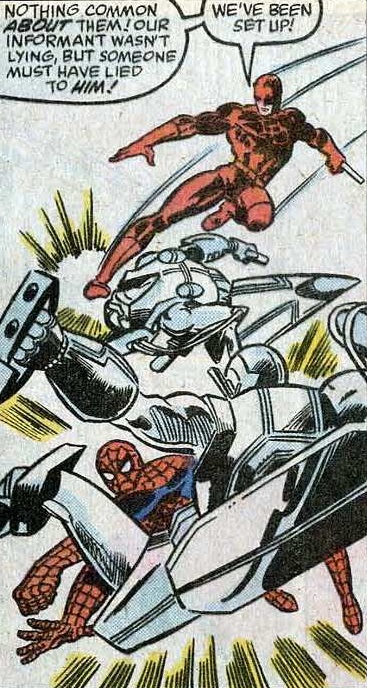
Friday, 15 February 2013

Essential Doctor Strange volume 1

We come now to the other great creation of Steve Ditko and Stan Lee, Doctor Strange. (Unfortunately there's never been a great deal of consistency over whether it's "Doctor" or "Dr." so I'm taking my cue from the volume's cover.)

Essential Doctor Strange volume 1 contains the Doctor Strange strips from Strange Tales #110, #111 & #114-168 - i.e. the full run before he received his own title for the first time. As previously discussed, Strange Tales was one of Marvel's anthology series and the good doctor shared the title first with the Human Torch’s solo tales and then with Nick Fury, Agent of S.H.I.E.L.D. The artwork on this volume is by Ditko all the way until issue #146 then Bill Everett, Marie Severin, Dan Adkins and George Tuska. The writing is initially by Lee with Ditko co-plotting, officially credited as such from issue #135 onwards, then the remaining strips are scripted or fully written by the likes of Roy Thomas, Denny O’Neil, Raymond Marais and Jim Lawrence. It's worth noting that Ditko's last four issues are not scripted by Lee.

In so far as there is a paper trail, the written evidence suggests that the idea for Doctor Strange was first thought up by Steve Ditko and only then fleshed out in collaboration with Stan Lee. There hasn't been as much debate over the character's creation as there has been with other characters, and I suspect Marvel hasn't given the issue as much time as Spider-Man's. (For example in the introduction to one collection they reproduced a contemporary letter from Lee to a fan in which Lee stated the magician was Ditko's idea. This reproduction probably did not go through endless corporate discussion.) It's interesting to note that Lee's (or Marvel corporate's?) stated definition of who the "creator" is excludes him on this occasion. Perhaps this is a sign of how it's the visuals rather than the script which gives the strip its greatest lure. A far cry from the hard edged urban grittiness of Spider-Man, Ditko's work on Doctor Strange is truly a voyage into the fantastic.

Unfortunately black and white can have its disadvantages and they are prominent here. Doctor Strange was one of the most psychedelic of strips put out by Marvel in the 1960s but some of that effect came from the colours and when viewed in black and white it seems more subdued. Never the less the exotic is still there, seen most graphically with the design of Eternity, whose body almost entirely consists of a starscape, perhaps the ultimate in psychedelia. On its original run the strip acquired a cult following amongst university students who wondered just what Steve Ditko was on. I doubt they ever guessed it was the philosophy of Ayn Rand. Nor do I think they spotted Ditko's attitude to hippies and student protesters, as expressed in his final issue of Amazing Spider-Man.

In all the speculation and discussion about Ditko's departure from Marvel, his work on Doctor Strange often gets overlooked. Perhaps it's because the magician has never achieved the levels of popularity that the wallcrawler has (although he's quite popular amongst creators). Perhaps it's because the departure came immediately after grand developments instead of just before them, and thus there's no creative decision to speculate on. Perhaps it's because Stan Lee was already off the strip, and it's harder to focus on his replacements. (Roy Thomas and Denny O'Neill may have both gone on to do great things, but in 1966 they were each starting out and not yet in great positions of authority. And when Ditko went, Lee immediately returned for the initial issues.) But whatever the reason, the result is that a key part of the puzzle is ignored. The strip climaxes with issue #146, entitled "The End -- At Last!", concluding the seventeen issue "Eternity saga" (although the "Dormammu saga" would be a more accurate description) and wrapping up many threads. It's a suitable ending for a long journey.

But every journey has a beginning, even if it's full of slips and omissions. Unfortunately the earliest Doctor Strange tales leave two matters out, both of which can affect subsequent stories. No origin is given for the good doctor until his fourth appearance in issue #115, in spite of several earlier stories involving the Ancient One and/or Baron Mordo. This omission is all the more surprising given that nearly every other Silver Age Marvel hero began with their origin being retold - was Doctor Strange originally intended to be a one-off feature? However whilst the origin omission is soon rectified, the other is left dangling and we never get a very clear sense of the full extent of Doctor Strange's powers, with the result that at times his escape from or triumph over his foes can seem all too easy. Without knowing his full limits, we are limited to statements that foes such as Dormammu and Umar are far more powerful than him, but it's not always clear why he can easily triumph over some foes yet others take far more skill.

As is often the case, this volume introduces quite a number of foes who would plague Doctor Strange again over the years. Given the importance of the artist, I'm going to split the list of débuts in two. In the Ditko issues we get the first appearances of, variously, Nightmare, Baron Mordo, Aggamon, the House of Shadows, Zota, Dormammu, Demonicus, Tiboro, Kaecilius and Shazana. There are also the Possessors, the strip's version of the alien race invading Earth that just about all Silver Age Marvel heroes faced. There is at least an attempt to make them relevant to Doctor Strange's series by having them come from another dimension and giving them the power to possess people. Visitors form other series are rare, but Loki from Thor's strip in Journey Into Mystery does show up. Just as standard are the various allies and other supporting cast members who début, and Ditko's issues introduce us to the Ancient One, Wong, Victoria Bentley, Clea (although she's not named for twenty issues), Hamir (the Ancient One's servant), Orini and the Aged Genghis. And standing above everything is the mysterious Eternity. The post-Ditko issues introduce yet more villains who would appear again, including Kaluu, Umar and Yandroth. There's also the one-off foe Nebulos, who I'm surprised nobody has yet brought back. Not that he's a particularly memorable foe but so many others have returned. Otherwise the only other significant débuts are two more powerful beings that defy easy description, Zom and the Living Tribunal.

These are reasonably impressive lists but they disguise the over-use of Baron Mordo in these issues, with Nightmare also popping up quite a bit before Dormammu becomes established as the other great foe. After Dormammu is seemingly destroyed, it's not long before a replacement is found in the form of his sister Umar. What lists also hide is the relatively weak use of the supporting cast. The Ancient One turns up a number of times to provide guidance and extra power, but otherwise most of the characters appear only occasionally and are weakly developed. Clea is initially presented as a potential romantic interest, but she and Doctor Strange are repeatedly kept apart, until the point where the Ancient One effectively banishes her for her own protection. Towards the end of the volume Victoria Bentley is dusted off to play the role of damsel in distress, but despite having some magic powers she's given little to do beyond being captured and rescued. There are also few attempts to give Doctor Strange many day to day problems, even though on more than one occasion we hear of problems with both money and the stability of his house, but in a later issue the money problems are literally magicked away when Doctor Strange produces the money necessary. Nor do we ever meet anyone from Strange's former life as an arrogant surgeon, or even get much exploration of how his character has changed beyond the origin story. This strip is a far cry from the soap operas being developed elsewhere at Marvel at the time, and is much more a fantasy piece with the art front and centre.

That's not to say the writing is inherently bad, and indeed the dialogue is often good, particularly the many spells Doctor Strange comes up with. But it really is the art that stands out. On the basis of these stories alone there is only one definitive Doctor Strange artist - Steve Ditko. None of his replacements succeeds in offering a boldly different style to get successive generations of fans debating, the way that Spider-Man fans do over Ditko and John Romita. And also in contrast to Spider-Man, there is a real sense of conclusion with Ditko's final issue. Many of the plotlines are resolved in the space of ten pages, the villain meets his comeuppance, the girl is freed and the hero walks away to rest. This is a very clear conclusion to the story and strongly suggests Ditko had reached the end of all he wished to do with the character. Whether this was indeed the case or not, I'm not sure, as there are reports that he had prepared two further issues when he left Marvel. But nevertheless it does provide a strong sense of closure.

(Yet from a modern perspective it's surprising to see the way Eternity is treated, with many believing him destroyed in battle with Dormammu, and for that matter the same surprise comes later with the Living Tribunal when each is here treated merely as a very powerful, mysterious being and not as one of the most powerful entities of all in the multiverse. It would take many years before Marvel took steps to arrange its many powerful cosmic beings into a coherent hierarchy, with the Living Tribunal invariably the single most powerful being shown, and Eternity the embodiment of the universe. Here they're just very powerful entities but without a hint as to their place in the greater scheme of things.)

After Ditko's departure the strip meanders somewhat, trying to maintain the sense of grandeur and excitement but a succession of writers and repetitive ideas mean that it doesn't quite succeed. What we get is a succession of mini-epics that are generally good in their own right (bar the last one with Yandroth that tries to combine science and the realm of dreams, not to very great success) but just don't compare at all well to the earlier majesty. Still they keep some pace going and do add a bit to Doctor Strange's world.

As can be seen, this is very much a volume of two halves and it seems clear from comparisons with the issues they didn't collaborate on that Steve Ditko rather than Stan Lee was the key driving force in the first few years. As a result the strip is driven more by the visuals over the writing than is usually the case. The writing may have its occasional repetition and omission, but combined with the art there's a great deal of imagination that produces a truly spectacular experience. Black and white may remove some of the psychedelic nature of the strip but the various spells and realms remain extraordinary, and a far cry from the rest of the comics world of its generation. Ditko's successors may not be as good, but they all try to follow the same path. The only possible additional strip I would have included is Amazing Spider-Man Annual #2 (otherwise available in Essential Spider-Man volume 2), which teamed up the wallcrawler with Doctor Strange with the latter really dominating proceedings in another tale drawn by Ditko. But when this volume was first released it was already the single longest Essential at the time (and only about a dozen since have been any longer), and back then it wasn't standard to include guest appearances as well. Otherwise this volume is a near perfect collection with the complete Ditko run the true jewel and the remaining issues a bonus.