Showing posts with label Evolutionary War. Show all posts

Wednesday, 3 November 2021

The Evolutionary War as a whole

And so how does The Evolutionary War stand as a whole?

To be honest not very well.

On paper the project sounds like a good idea - tell a story whereby a powerful being is putting together a master plan with different series tackling different aspects of it. Putting it in the annuals at first glance suggests that there will be forgettable chapters written by guest writers but what's astounding is that of these twelve annuals no less than eleven are written by respective series' regular writer at the time and the twelfth (Web of Spider-Man Annual #4) notably lacked such a regular writer at this stage. So this should be the opportunity to combine a lot of talent and come up with a great spectacle.

Instead we get a rather incoherent mess. The underlying problem is that the various Marvel heroes range incredibly in terms of power and scope such that it becomes hard to believe a master plan can simultaneous involve a war on drugs and investigation of aliens. It's also clear that a lot of writers were not terribly interested in the crossover and instead at best used it to provide motivations and/or some hi-tech foes for the stories. At worst we get attempts to build up other characters and the central plot is ignored. To add to the mess too many of the annuals instead seem to be promoting new characters or guest stars at the expense of both the headline stars and the crossover event.

Where the stories work is when a writer takes the Evolutionary and his plans and uses them to generate a tale that really involves the characters and develops them well. The best chapter is probably New Mutants Annual #4 which uses the event as the opportunity to beef up Mirage and her powers followed by the climax in Avengers Annual #17. But it is saying a lot about the weakness of the chapters as chapters that the third best annual is Alf Annual #1 with little more than a comedic encounter between the start and Evolutionary. At the other end of the scale the worst chapter is Web of Spider-Man Annual #4 that throws far too many elements in and is far more interested in introducing a new character called Poison. Also dire is Spectacular Spider-Man Annual #8 that has too much attention devoted to the Young Gods but completely fails to sell the idea of giving them their own title. And whilst Punisher Annual #1 may be a decent Punisher story it is a chapter that cannot even disguise that crossover is completely out of the Punisher's league.

It doesn't help that the lead character is fundamentally misnamed. Evolution is not some fixed path by which a species advances and which can be accelerated. Instead it is adaptation and survival as a species develops to better meet the challenges around them with the natural mutations that best fit the challenges coming to the forefront. What the Evolutionary is aiming for is instead a mass mutation to enhance the species which is a goal in its own but outcome isn't going to turn humans into what they will have evolved into many thousands of years in the future.

And the nature of the individual chapters also means that most of the Evolutionary's plans end in failure because he goes after a big goal and is defeated rather than exploring things on the sidelines. A few vary from this such as his restoration of the Savage Land in X-Men Annual #12 which does actually succeed advance his plan whilst his exploration of the nature of the Professor Warren clones in Spectacular Spider-Man Annual #8 is more of a sideline than an actual exploration. But otherwise there are many defeats and it's amazing he's able to get the genetic bomb together by the end.

The plot line of a powerful being wandering in and out of various series had been done a few years earlier with Secret Wars II and it's easy to see why such a format is attractive as it not only makes it easier for readers to not have to buy every single issue to have a clue what's going on but also can be very friendly to changing schedules where the final choice of which series got annuals that year may have changed last minute - certainly The Punisher's first annual came surprisingly early in a series's run and was clearly down to initial huge sales. But it invariably leads to such an inconsistent meander through the books as they all try to do their own thing and slot in the crossover rather than a better structure focusing the plots on the Evolutionary and using the characters as appropriate. Many later crossovers would veer more towards this structure.

The back-up story "The High Evolutionary" is the main direct link between the annuals. It's a pity that a mess resulted in Amazing Spider-Man Annual #22 and Fantastic Four Annual #21 getting swapped around such that the lead stories and saga chapters come in different orders but otherwise this is a consistent flow from title to title. It's a good attempt to introduce the Evolutionary and tidy up what had become quite a sprawling backstory but it also shows just what a mess had been created with so many different characters having links to Mount Wundagore over the years that the saga at times struggles with.

Over The Evolutionary War is a failure. The basic storyline just not lend itself to endless appearances across multiple different titles and it's compounded by many of the writers not really incorporating it so well. So much of the crossover is structured to be missable that very little of it is essential and it shows. This was a bold experiment by Marvel and clearly sold well enough that not only would they repeat the structure of crossovers between multiple annuals in later years but DC would also go down that route, but as a story it's a failure.

What If...? 1

What If the Avengers had lost The Evolutionary War?

What If...? #1

Script: Roy Thomas
Breakdowns: Ron Wilson
Finishes: Mike Gustovich
Letters: Mike Heisler
Colors: Tom Vincent
Editing: Craig Anderson
Supervision: Tom DeFalco

The Watcher describes a universe where the final battle of The Evolutionary War ends differently with the genetic bomb going off. All superpowered beings find their powers enhanced whilst all other humans changed to have enhanced larger heads with a greater understanding and telepathic powers. Humans around the world soon find peace and harmony with one another but the super powered beings realise the two types of human cannot live together and so they depart for space, soon joined by the Inhumans and Eternals. They soon take on multiple alien forces including the Kree, Shi'ar and Skrulls, destroying all their armies. Then they defeat Galactus before conquering Death and Eternity to form a single Entity. Back on Earth humanity has evolved into identical looking telepathic beings who one day face the judgement of the Celestials who condemn the planet but the humans have the power to disintegrate one Celestial and drive the others away. Now they form a collective mind on a living planet. Out in space the Entity tells the High Evolutionary it does not need his guidance before passing into another universe and causing a Big Bang to create a new universe with Death and Eternity now separated and the superpowered beings absorbed into one or other. Meanwhile the old universe now lacks its binding forces and folds in on itself as the High Evolutionary watches the end of it all.

The second series of What If...? launched in 1989 some five years after the first had concluded. Now monthly and with fewer pages before it also had a notably more modern focus. Fewer issues would feature alternative takes on the Silver Age and instead there would be more contemporary takes including a good number of tales that tell alternative endings to prominent storylines and crossovers. The very first issue does just this with an alternative take on the previous summer's annual crossover and describes what might have been.

Describes is very much the word as this issue is predominantly a narrated history of the alternative outcome describing a succession of one event after another. There's no attempt to give alternative outcomes to recent Marvel stories and instead we see the humans and super powered beings quickly coming to terms with their genetically accelerated state. Most of the continuity is fine though there are a few characters shown glimpsed who weren't around on Earth at the time such as the Molecule Man or in altered form - a scene with X-Factor is particularly bad as it shows the Angel in his original form and the team used to being feared and loathed when they had a huge public popularity at this time. Wolverine is picked as the leader of the super powered beings for reasons even the others aren't quite sure of, showing a failure to convert his sales popularity into narrative leadership. The space scenes are rather imaginative in suggesting that ultimately the super powered beings could surpass not merely the race of Beyonders but (without naming him) the Beyonder himself. Meanwhile on Earth the humans seem to be evolving into a race from Star Trek whilst the likes of Daredevil and the Vision cope with aging and loneliness in their own ways.

This is a sign of the direction the series would often go with ultimately apocalyptic outcomes and somewhat rushed stories. Unfortunately this one doesn't really reveal much about any individual characters through placing them in alternative circumstances. Instead it's a grand narrative piece of universe building. This would have been an okay later issue but the first one for the new series really should have been more character focused. Instead it shows how big concepts could often produce poor results.

Tuesday, 2 November 2021

Avengers Annual 17 - The Evolutionary War

The High Evolutionary's genetic bomb is ready to detonate - and the Avengers have disbanded.

(Once again we have an annual with a lot of creators so some of the labels are in a separate post.)

Avengers Annual #17

1st story: Prometheus Mutans!
Writing: Walter Simonson
Penciling: Mark Bright
Inking: Mike & Valerie Gustovich
Lettering Oakley, Heisler, Parker
Coloring: Evelyn Stein
Editing: Mark Gruenwald
Editing in Chief: Tom DeFalco

The Avengers' Hydrobase receives an emergency call from the resurrected Jocasta about the imminent detonation of the High Evolutionary's genetic bomb. But the team has disbanded so the computers summon as many reserve Avengers as it can contact. Thus Captain America, the Falcon, Hercules, the Beast, the Hulk and the second Yellowjacket come to the island to deal with the emergency. First they travel to a base on Long Island where they rescue Jocasta and discover the detail of the Evolutionary's plans. They then head to the Pacific where they find a war breaking out between the undersea kingdoms of Lemuria and Atlantis due to false information supplied by the Evolutionary who sends in a weapon to sterilise the two opposing forces. Finally the three pursue the Evolutionary's submarine base to Krakatoa where the bomb will be detonated in the volcano to spread all over the world. The Avengers battle both the Evolutionary's forces and themselves but the cost is high.

As discussed when looking at Avengers #298 this was a period when the Avengers had disbanded and it would take a little time for a permanent new team to be put together. In the meantime that allowed Walter Simonson to have some fun and bring together a one-off team. Some have wished that this line-up could have become the new Avengers permanently but it's hard to see it working in the long run. For one thing no less than three of the characters were regularly appearing in other series (Captain America and the Incredible Hulk had their own titles whilst the Beast was a part of X-Factor) and if it was difficult enough to co-ordinate the appearances of traditional Avengers such as Captain America it would have been a nightmare to fit in with the continuity of the other books even if one of them was written by the Avengers' writer's spouse. But there's also a strong element of dysfunctionality built into the team. The Hulk is in his "Joe Fixit" era of an amoral mob enforcer who shows reluctance to get involved with saving the world, is no team player and also tries to steal power for himself. Yellowjacket is a criminal drawn in purely because the helmet she stole from the original picked up the summons; she was one of the Masters of Evil who occupied the Avengers Mansion beating up Hercules to an inch of his life and also torturing Captain America (although she herself was not one of the ones who directly did either of those) and both still have strong memories of that. Captain America is on the outs with the US government in this era (with a replacement using the name and costume) which would make it difficult for him to assume a role heading a formally accredited superhero team. Jocasta is highly vulnerable. Only the Falcon could easily stay around in such a line-up at this time.

There's also a question of superhero ethics. The traditions of heroes not killing were under strain by this time and some of the team have no qualms about leaving foes to go to their death or even sending them there. Others less so. But oddly this isn't dwelt on here even though the Hulk charges into the Long Island base and kills all but one of the Gatherers present (though the bodies are not shown on panel). Later the Beast and Captain America willingly implement an idea by the Falcon to set the Gatherers and New Men against each other by playing on the former's prejudices and the result is a lot of killing. Then Hercules battles the High Evolutionary until he is "discorportating". Finally the surviving Avengers flee the submarine as the self-destruct is activated but make no effort to take the surviving Gatherers and New Men with them. Superhero comics were getting ever more darker and just a few years later the regular Avengers series would see the heroes facing the question of whether or not to kill so some of these developments aren't too surprising. But it's odd that there's little acknowledgement here of what the Avengers have been forced to do.

The plot does meander a little and it's hard to escape the feeling that the scenes involving Lemuria and Atlantis were added simply to pad this story out to fill the entire annual (bar six pages for the saga chapter at the end). But it gives lots of good character moments with the Beast especially benefitting as he combines strength, science and humour. Yellowjacket has found herself dragged into all this against her will and is completely scared by the whole situation but comes to the fore first in finding the bomb and then in attacking the Evolutionary long enough to buy time for Hercules. Though unspoken it also gives her a moment of redemption for her past.

There's some dodgy science afoot. The Evolutionary's powers seem incredible here including being able to teleport the Hulk all the way out of the base to the Nevada desert and twice making special cages appear out of nowhere to hold one or more Avengers. The Avengers decide the only way to counter him is to come up with their own super being and so subject Hercules to the genetic accelerator to create their own superbeing. The two fight to destruction with the High Evolutionary blasted into particles and Hercules mutating beyond godhood and out of the plane of existence. For a story rooted around a scientist's grand vision the conclusion has at times felt almost too magical to work. There's also the continued misuse of the term "evolution" when the mutations are done to intelligent design - or intelligent accident as the case may be. Fortunately the ending feels more scientific as a dying Jocasta plugs herself into the submarine's systems and activates the self-destruct mechanism to destroy the genetic bomb before it can be detonated.

This is a harsh brutal showdown to a big event and it feels appropriate that it's a much smaller team who escape at the end compared to the one that arrived. The High Evolutionary's plans may have meandered all over the set of annuals but here the focus is all too clear and the stakes couldn't be higher. The Avengers line-up here is not one that could have lasted but makes for a good team with its own internal problems facing down a major threat to the whole world in the Marvel tradition. Although the story is overlong and could have done with the Lemuria and Atlantis element it nevertheless makes for a strong climax to what has been a rather disappointing crossover.


2nd story: The High Evolutionary: Beyond Life
Story: Mark Gruenwald
Breakdowns: Ron Lim
Finishes: Tony DeZuniga
Letters: M. Yee & J. Rosen
Colors: Gregory Wright
Editor: Ralph Macchio
Chief: Tom DeFalco

The final chapter recounts the High Evolutionary's last appearances before this event. It's a straightforward summary of how Counter-Earth was moved across space by a race of alien beings call the Beyonders and placed in a museum with the whole encounter convincing the Evolutionary that despite being the most evolutionary advanced human in existence he was not a god but merely insignificant. This led to despair as he sought to commit suicide but found himself trapped in his armour that prevented him from using his powers on himself. So he manipulated the Hulk into attacking him to rip open the armour then he devolved himself all the way down to a single celled organism. The final page shows how the armour restored both itself and its occupant, who now regained his confidence and concluded that humanity on its own would never evolve to the level of the aliens he had seen and instead the race as a whole needed a guiding hand which he would give.

This final chapter shows how the character had come back to life after what seemed to be a pretty conclusive death and uses the last stories to provide a convincing explanation as to how the character has expanded the scope of his vision to the scheme seen in the event. It also restores an element of dignity that was lacking in the final Hulk story. As a later chapter recounting ongoing comics rather than stitching together multiple backstories the result is invariably straightforward but it serves to bring readers up to date with the character and provide a springboard for the main event.


Because of the length of the main story there are no other back-ups or features in this annual. Instead the whole thing is devoted to the resolution of the big crossover. Space could have easily been found for features by trimming off the unnecessary part of the main tale but that raises the question of just what would have been contained in the features since there was no regular Avengers team at the time. Also with issue #300 on the horizon it was perhaps better to leave the features for that and instead here have an extended climax to ensure the whole event goes out with a bang.

Thursday, 28 October 2021

Spectacular Spider-Man Annual 8 - The Evolutionary War

Spider-Man faces new revelations about the Original Clone Saga.

Spectacular Spider-Man Annual #8

1st story: Return to Sender
Script: Gerry Conway
Pencils: Mark Bagley
Lettering: Rick Parker
Inks: Keith Williams
Color: Bob Sharon
Editor: Jim Salicrup
Editor in Chief: Tom DeFalco

The High Evolutionary is making a couple of final investigations in this penultimate chapter of the event. He goes out into space to investigate the Young Gods, a group of twelve humans genetically advanced by the various pantheons on Earth and taken away by the Celestials, but judges them "only children with god-like powers" and leaves to continue his plans. However Daydreamer reads his mind and discovers his plan with the Young Gods dividing in two over whether they should seek to stop him or not interfere in human destiny. One faction goes to confront the Evolutionary on Earth with the other following to stop them. Meanwhile Spider-Man encounters the Purifiers chasing a woman and is shocked to discover she resembles his dead former girlfriend Gwen Stacy. He soon realises this is her clone and catches up with her when she is captured by the Purifiers. Transported back to the Evolutionary's base Spidey gets caught up in the battle between the Purifiers and the Young Gods whilst the Evolutionary makes a careful study of Gwen's clone and comes to a startling revelation.

There's a lot going on in this annual so let's get the biggest problem out of the way first. The Young Gods simply do not fit into Spider-Man's world. They are a very obscure group of characters originally introduced by Gerry Conway in his early 1970s run on Thor with a later writer refining them and adding the Celestial connection. They have had very few appearances over the years, primarily because few other writers have touched them and Conway was either not at Marvel or working on inappropriate series. Here they just stick out like a sore thumb and it's easy to see why there was no great demand for them to return or be given their own series. The fight scene in the Evolutionary's headquarters (now a giant submarine) could have featured any group of heroes for all the difference it makes. And Daydreamer's role at the end doesn't match her powers which are given in the "Fact Pages" later in the annual as "Limited precognition, verbal and telepathic thought control, the ability to create 'visions'". None of this explains how she is able to neutralise and reverse the effects of a genetic virus that transforms a person "on a cellular level into a near duplicate of the original" and restore "Gwen" to her true self.

This brings us to what the annual should be notable for as the retcon here should by rights have completely stopped one of the most notorious Spider-Man stories of all time. Contrary to myth the heavy retconning of the events of the Original Clone Saga began in the 1980s before anyone had heard of Ben Reilly. The clone of Gwen Stacy had not been seen since the end of the original saga (which was also Conway's last issue of Amazing Spider-Man) when she made her peace with both Peter and what she really was and there was never any real need to bring her back. But here we get the revelation that she isn't a clone after all. The Evolutionary reveals that he wondered how a university professor could have come up with cloning (clearly forgetting that in the Marvel Universe numerous academics have been able to access and develop all manner of advanced technology) and instead that he had developed the genetic virus then kidnapped another woman similar to Gwen and infected her to create what appeared to be a complete genetic duplicate. (Incidentally the name "Joyce Delaney" doesn't appear in this annual despite what some synopses online state.)

There is so much about this that just doesn't make sense. Firstly why is the Evolutionary so concerned about the work of a long dead university professor whose work has left only one remaining clone around? There is nothing indicating that his plans for genetically advancing the human race can be derailed by this. Secondly if cloning was beyond the ability of Warren then how did he come up with the genetic virus? Thirdly if Gwen Stacy wasn't a clone then what about the others? Who was the Spider-Man clone? Carrion claimed to be a clone of Warren gone wrong so who was he actually? Finally if Gwen's clone was actually another woman then how come her disappearance wasn't noticed?

Some of this would be resolved in a forthcoming issue of Spectacular Spider-Man but it began the trend of partial retcons of the Clone Saga that didn't cover every detail and which would require further stories & retcons to clean things up, often including explaining how Carrion fitted into the new version of events. But it's also notable that the revelations in this annual should have closed off the possibility of bringing back any other clones as the genetic virus could simply have been purged from the system. (However instead the annual was largely ignored for much of the Clone Saga with the revelations here simply brushed aside until a persistent assistant editor managed to get the only issue of Scarlet Spider Unlimited to address them. But that's a story for another day.) It's a pity as the genetic virus approach would have been a much easier way to get the story settled once and for all.

It's not clear why (presumably) Conway felt the need to revisit the Clone Saga at all. Was it because there was growing public awareness that cloning did not lead to fully grown identical duplicates being made in laboratories? Was it to shut down the possibility of other writers bringing back the clones? If so then it was spectacularly unsuccessful. But the result is a big retcon of a story from thirteen years earlier that could have just left things there and then.

(On the subject of continuity this story also repeats a common continuity error by Conway. For some reason he repeatedly got the details of Peter's high school years wrong, here claiming that Peter and Mary Jane knew each other then when in fact they didn't meet until Peter was at university. Time and again he would make this error and also imply that Peter had dated Liz Allen in high school with Mary Jane disliking her then. This has appeared so many times and so clearly in his Spider-Man stories from both the 1970s and 1980s that it can't be a mere misinterpretation.)

This annual would have worked a lot better as an earlier chapter in The Evolutionary War when it would have made more sense for the High Evolutionary to be exploring genetic anomalies as he is a natural character to use to explore the truth behind Warren's experiments. It doesn't feel like a penultimate chapter at all and instead feels like a fill-in marking time between the two Avengers annuals. The obsession with the Young Gods also weighs this story down further. However there are some good moments such as the two scenes between Peter and Mary Jane as they face the memory of Gwen and just what it says about their relationship with each other. But overall this is a mess of a story weighed down by a disproportionate focus on inappropriate guest stars and a needless retcon that makes little sense.


2nd story: Opposing forces
Writer: Gerry Conway
Pencils: Mark Bagley
Inker: Mike Esposito
Letters: Rick Parker
Color: Bob Sharon
Editor: Jim Salicrup
Editor in Chief: Tom DeFalco

Several of the Young Gods have travelled to Jerusalem where they discover an ancient robot buried in the hills that feeds off anger and is triggered by the presence of the Young Gods and an Israeli army patrol fighting a group of teenage Palestinian protestors. The Young Gods argue over whether to get involved and charge in but only achieve success when several come together to form the Uni-Mind.

Rather than a back-up focusing on some Spider-Man characters we instead get a solo tale for the Young Gods that shows off the differences in their philosophies about getting involved with human affairs as well as a demonstration of their powers and a rather forced message about the power of working together. This tale just shows why the Young Gods have not interested other writers as they're a rather dull cliched set of characters. Putting the story here along with five "Fact Pages" about them just adds to the sense that they've taken over Spider-Man's annual unnecessarily. It ends with a caption announcing "To Be Continued... Watch future issues of Spectacular Spider-Man to find out where!" but instead they wouldn't be seen again until a multipart story in Marvel Comics Presents in the early 1990s. And it's easy to see why. This is just a waste.


3rd story: The High Evolutionary: Kindred Spirits
Story: Mark Gruenwald
Breakdowns: Ron Lim
Finishes: Tony DeZuniga
Letters: Ken Lopez
Colors: Gregory Wright
Editor: Ralph Macchio
Chief: Tom DeFalco

This chapter tells of how the High Evolutionary returned to mortal form albeit far more advanced than contemporary humans, the creation of Counter-Earth and his relationship with Adam Warlock. The Counter-Earth saga has a notably more scientific approach and veers away from the Biblical parallel of the original story whilst there's also a retelling of the final (for then) showdown between Warlock and the High Evolutionary.

Once more the saga is retelling past Marvel stories though the encounter with Warlock was another flashback due to his own title ending before it could happen (although it was prophesised) and he was soon after killed off. That was one of Mark Gruenwald's earliest pieces of continuity surgery so with this chapter he has now come full circle. Also coming full circle is the way the Evolutionary starts and ends the chapter in his energy thought form, almost as though anyone missing this annual (such as someone who read both Avengers books but not the crossovers) would not feel they were missing something. However it's a pity that the reasons behind Warlock's false belief that Counter-Earth has been destroyed is not explained here beyond speculation that his Soul Gem is interfering with his perception. Otherwise it's a straightforward summary of a distinct period of the Evolutionary's appearances.


Other material includes "The Young Gods Fact Pages!" outlining their origin and each of the characters. Yet again it reinforces the idea that this annual wants to be a Young Gods annual. For some reason a lot of 1980s Spider-Man annuals have a tendency to forget who was the star of the series and suggests that many creators were longing for the days of Marvel Team-Up. This is especially disappointing given how important the revelation in this annual should have been for Spider-Man continuity in the long-term.

Saturday, 23 October 2021

West Coast Avengers Annual 3 - The Evolutionary War

The West Coast Avengers have split in two as the High Evolutionary's plans step up a gear.

West Coast Avengers Annual #3

This annual is unusual in that instead of one big story focused on The Evolutionary War followed by some shorter back-ups it has two separate stories from the war. This is because it came out at a point where the West Coast Avengers had split with Mockingbird, Tigra and Moon Knight leaving the others amidst the break-up of Mockingbird and Hawkeye's marriage. It's notable that all three of Steve Englehart's annuals are set very specifically between issues of the relevant ongoing titles which helps continuity and those constructing chronologies but it can also present a slightly confusing status quo. Here the details of the split are not gone into and instead we have two tales of the separate factions that both end with the same scene of Hawkeye's team discovering a hole in the Savage Land.

1st story: Head you lose --!
Story: Steve Englehart
Layouts: Al Milgrom
Finishes: Gerry Talaoc
Letters: Bill Oakley
Colors: Marc Siry
Editor: Mark Gruenwald
Chief: Tom DeFalco

The first story focuses on the High Evolutionary's attempts to steal a supply of vibranium from the Black Panther's kingdom of Wakanda. One of his technicians turns out to be Bill Foster, the former second Giant Man, who hides a note on one of the Gatherers who are easily defeated by the Wakanda forces. The note informs the Panther there is a much bigger scheme afoot and to call in Hank Pym. Pym himself is unavailable but the rump of the West Coast Avengers arrive and face down another squad of the Evolutionary's called the "Sensors" - Sight, Touch, Sound, Smell, Taste and Intuition - who battle the team whilst the vibranium is stolen.

This story is particularly notable for making use of previous chapters and we see there was a purpose to the High Evolutionary's restoration of the Savage Land back in X-Men Annual #12 as he is now operating out of a base there so it's good to see later chapters of the saga building on earlier events. It's also notable for the odd way Mantis is written with very little dialogue even in panels when she is the main focus and clearly drawn to be speaking. This was reportedly another effect of the breakdown in relations between Englehart and his editors with Mantis at the centre of the storm.

Unfortunately the short length of this story combined the initial scenes set in the Evolutionary's base and the battle between the Gatherers and the Wakandan forces means the official West Coast Avengers are only seen for eleven pages of their own annual. The split nature of the team and the story may have created such a constraint but the outcome is a rather slight contribution by one side.


2nd story: Tales you win!
Story: Steve Englehart
Layouts: Al Milgrom
Finishes: Chris Ivy
Letters: Bill Oakley
Colors: Marc Siry
Editor: Mark Gruenwald
Chief: Tom DeFalco

The breakaway team have travelled to the Savage Land for reasons not given here and spend the first part of the story meeting with Kazar and learning how the Savage Land was restored before deciding to investigate the Evolutionary and his base. They just knock on the door and are surprised to be let in and taken to the Evolutionary himself who calmly announces his plan as, "I'm building a bomb which, when detonated, will mutate everyone on Earth!" He subdues them with gas and puts them into a hi-tech maze to test their suitability for genetic experiments. All three quickly overcome the respective robot sent to deal with them but Tigra and Moon Knight seem to spend too much time interested in each other's company to advance far through the maze and so only Mockingbird reaches the Evolutionary who expands in size. But so do does Bill Foster who resumes his role of Giant Man (although not the costume despite what the cover shows). With the vibranium captured in the other story the Evolutionary opts to relocate to build his bomb and so abandons the base, blowing it up.

The return of Giant Man is clearly meant to be a big thing in the annual with both stories quickly summarising his origin (and his original risky name of "Black Goliath) and also how he contracted cancer but was cured by a transfusion from the original Spider-Woman; however his body could no longer stand the strain of size changing. However he infiltrated the Evolutionary's operations to use the equipment to develop a serum to restore growth and use the gained mass to cleanse his body. There's a bit too much technobabble about how it works but the result is that a real life terminal disease is cured through fantastical elements which is a bit insensitive (although up to the transfusion the detail was first shown in earlier comics rather than here).

This chapter is more focused on the series's actual characters and provides some good action scenes. Unfortunately it fails to explain just why they happen to be in the Savage Land in the first place and the way Tigra and Moon Knight seemingly hook up in the middle of the maze does neither character any favours. But it does take a strong step forward to advance the Evolutionary's plans rather than being yet another side element in the overall scheme. The split narrative allows for different elements of the story to be given equal weight but it comes at the effect of atomising the individual strands so that neither feels too satisfactory. This is an innovation in story telling that doesn't work.

3rd story: The High Evolutionary: The Final Frontier
Story: Mark Gruenwald
Pencils: Ron Lim
Inks: Tony DeZuniga
Letters: Ken Lopez
Colors: Gregory Wright
Editor: Ralph Macchio
Editor-in-Chief: Tom DeFalco

The saga has now reached the original stories featuring the High Evolutionary. Curiously very little of his first appearance in the pages of Thor is retold here and instead the chapter opens with the Citadel of Science launching for the stars at the end of his encounter. Then we see how out in pace the Evolutionary found a new planet and settled there with the New Men, mutating more animals to provide them with wives and leaving them to build the world whilst he continued with his experiments. But instead the New Men devolved into savagery and he had to find a being to bring order to the planet - who turned out to be the Hulk. But the Evolutionary was mortally wounded in battle and could only survive by submitting himself to the genetic accelerator becoming a being of pure thought.

There's less to say about this chapter as it's recounting mid Silver Age stories that had the same writer and a greater element of consistency compared to the massive accumulation of back story the first eight chapters had to wade through. It's a pity the Evolutionary's first appearance is not recounted in more detail as it would be interesting to see how readers first encountered him. Also omitted is an explanation as to how he managed to stay looking so young when he would have been in his 60s or even older at the time of these tales. Instead we get the first big sign that the Evolutionary has made mistakes with his New Men not proving the successful new race he hoped for and the first sign of how he would repeatedly have to turn to outside help to get the products of his experiments under control.


Also included is a pin-up gallery which takes a more whimsical approach than most. There's also the unused cover for issue #14 (which was replaced by the line-wide 25th anniversary format of a headshot of a single character in a uniform frame).

Overall this annual is aiming high but rather misses the target. It's trying a different formula for telling the story but it results in two separate chapters that each feel in substantial when a combined single tale could have felt much stronger. This also pushes out any back-up stories that could have enhanced the overall feel of the special and the result is a bit of a disappointment.

Friday, 22 October 2021

Alf Annual 1 - The Evolutionary War

There's an alien life form on Earth and meeting the High Evolutionary could be the least chaotic thing to happen to him.

Marvel wasn't just publishing superhero comics in 1988. One of their lasting series was Alf, based on the popular sitcom of the time and its spin-off cartoons. I have to admit to barely remembering the series. Some of the live action episodes were shown here in ITV before it got transferred to Sky which we didn't have. I don't think the cartoons were ever shown here. And I completely missed both the US comic and its UK reprints (both under its own title and in the Marvel Bumper Comic) so this annual is the only time I've ever encountered the comics.

I'll say upfront - this is a comedy comic not a superhero adventure one and so should be approached as such. It's also got many more stories than the average annual so let's see how much they pack in and how comprehensible it is.


Alf Annual #1

1st story: The Return of Rhonda

Story: Michal Gallagher
Pencils: Dave Manak
Inks/Colors: Marie Severin
Letters: Rick Parker
Editor: Sif Jacobson
Editor in Chief: Tom DeFalco

The first story is a sequel to an episode from the live action series in which Alf (or Gordon Shumway to give him his real name but "Alf" is how he's usually referred to) got in contact with his old girlfriend from Melmac and nearly went away with her to found a new planet. Now Rhonda has crashed on Earth and wants Alf to come with her. He takes time to make up us mind and in the meantime the Tanner family have to put up with having another Melmacian about.

Visually the characters seem to be based on the cartoon rather than the live action show and Dave Manak has a good cartoony style that works well for such an unconventional sitcom. This story has the right idea of introducing the basic set-up through a visiting character but then fumbles by making it a sequel to a specific television episode that not everyone may have seen and threatening a change to the dynamic. Although Alf was a massive it back in the day it's not too wise to make a special too impenetrable.

There are some good moments in the story, particularly Brian Tanner's reaction to the prospect of Alf leaving or the culture clash as Rhonda inflicts her cooking on Kate, perfume on Lynn and car engineering on Willie. It soon becomes clear how this series conforms to the stock sitcom family of well-meaning father, nurturing mother, teenager, precocious child and eccentric live-in (sort of) relative though it's not so obvious as to just why the Tanners are so attached to Alf such that they have taken him in and are happy to see him stay.

This story is a fun wacky sitcom piece but as someone coming to the series effectively cold it doesn't do the best job at introducing the set-up.


2nd story: Back to Human Nature
Gallagher/Manak/Severin
(The credits for each remaining story are just three surnames with no specific roles given.)

This is a tale of the Tanners and Alf going on a camping trip in Yosemite National Park. On the first night Alf goes chasing after a bobcat and he and Willie then find themselves lost in the dark and having to deal with the local wildlife. It's quite a simple plot that lends itself to some good situation moments such as Alf chasing after the bobcat without realising how dangerous it is or the moment where Willie grabs what he thinks is Alf in a cave and runs out only to find he's picked up a bear cub - with the parent following him. It's just the sort of tale a classic summer special should have.


3rd story: Safe at Home
Gallagher/Manak/Severin

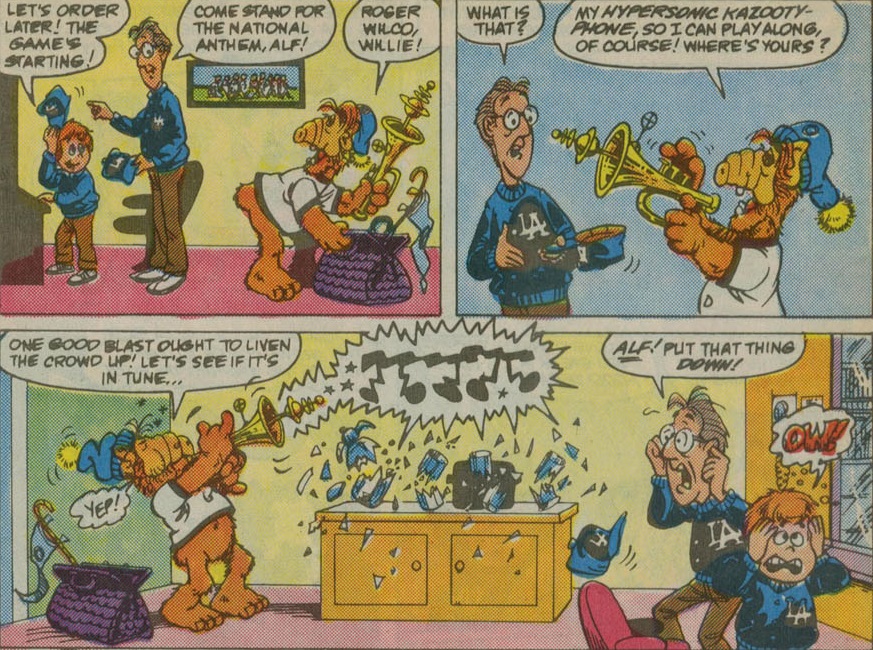
Willie takes Brian and Alf to watch a baseball game from a private box where the alien can't be seen. But Alf is used to a very different audience etiquette and when he gets excited his nose lights up very brightly...

As someone who doesn't understand baseball it's fortunate that this strip is based around the situation in the viewing box rather than the details of the game and the critical moments are easy to understand. The comedy as Alf starts playing a trumpet to the national anthem or using a repulsor to interfere with the ball make for good culture clash moments whilst Willie and Brian's reaction to the moment when the game is lost is understandable for any sports fan no matter what the sport.


4th story: You Give Me Fever
Gallagher/Manak/Severin

Alf is taken ill with a strange Melmacian disease - influence-a in which he acts out delusions brought about by media and the Tanners have to indulge him whilst keeping him in the house. First he thinks he's General Patton putting them through training, then a sleazy reporter revealing Willie and Kate's secrets then finally Robin Hood tying them up and preparing to give away their things. It's a one joke story that just about avoid outstaying its welcome though some of the delusions are especially silly particularly the reporter.


5th story: A Campy Approach
Gallagher/Manak/Severin

Brian is going away for summer camp and looking forward to it. But Alf is from a world where summer camps are punishments and he becomes convinced that this is what Brian has been sent to. So he devises a plan to travel to the camp and liberate Brian.

This is another culture clash story with Alf's misunderstanding and determination to save Brian from a terrible fate having hilarious consequences. There's a fun scene when Willie is phoned up to be asked a trivia question about a movie and Alf assumes the conversation is about other horrific camps. Later Alf disguises himself as a gorilla and Willie has to set minds at ease. But the best fun comes at the end as Kate gives Alf the most appropriate punishment. This is the highlight of the annual as a good extended comedy situation that explores the scenario fully.

At on point a projection of the High Evolutionary's head appears and demands to question Alf but it's not a convenient time so he agrees to come back in a couple of days. It's an odd interlude leading into the final story.


6th story: You Say You Want an Evolution?
Gallagher/Manak/Severin

This final two page strip sees the Evolutionary materialise in the Tanner house one night to talk to Alf and determine that he is not a threat to human development before cleansing Alf's memory of the incident. Alf declares the whole thing a nightmare and the consequence of reading eleven Marvel annuals before going to bed.

It's a fun little trailer for the whole event and it maintains a good ambiguity about whether Alf is in the Marvel universe or not. The High Evolutionary spoke at Alf's graduation and is in character but Alf is also aware of the existence of Marvel comics telling the story. But then many a comedy strip has broken the fourth wall in such a manner. It's also notable that the eleven annuals seen include ones for Daredevil, Thor and (seemingly) Alpha Flight. Did the final cut come late in the day or was this just an acknowledgement of series left out?

Overall this is a nice little link to Marvel's big event without descending into parody or overwhelming a comedy title. It's surprising more wasn't made of this as it's a good way to draw readers in to try some variation.


There's no bonus material as such in the annual but oddly there is an advert for itself that reproduces the cover and curiously notes it's from "Star Comics" when that imprint had now been wound up and in any case was never used for the series. There's also a two-page strip advert for the Bullwinkle and Rocky series.

It's a pity that the cover has a limited relationship to the contents. It's apparently based on a dream sequence in the television series but out of context it just looks like a crazy moment. Also there's not as much holiday content (let alone Alf draining Willie Tanner's savings) as promised.

As a whole this annual is very different from the other ones I've been looking at. There are far more stories but they're all focused on the core characters. Comedy series often rely heavily on gags and incidents rather than extended plots so it's unfair to criticise the story structures. It's a pity the first story is a direct sequel to an episode of the television series as it would have been better to introduce things for readers less familiar with every episode. I'm not sure how many readers actually were brought in by The Evolutionary War tie-in - it's prominent on the cover but this annual is not mentioned in the others or on the standard list so many could easily overlook it. But it's a good comedy piece and a reminder of a time when Marvel reached out to a broader range of readers. For that it's worth seeking out.

Thursday, 21 October 2021

Web of Spider-Man Annual 4 - The Evolutionary War

Spider-Man finds a book tour takes him into chaos in the Everglades.

Web of Spider-Man Annual #4

1st story: Sweet Poison
Writer: Steve Gerber
Artist: Cynthia Martin
Letterer: Rick Parker
Colorist: Janet Jackson
Editor: Jim Salicrup
Editor in Chief: Tom DeFalco

Peter Parker is on a tour promoting his book of Spider-Man photographs and gets caught up in the attempts by the Slug's men to secure a reserve supply of drugs for New York, following up on the supply problems established in the Punisher and Amazing Spider-Man chapters of The Evolutionary War. Meanwhile the High Evolutionary has sent his Eliminators and Purifiers to the Everglades to find the Nexus of All Realities in order to locate alien genetic pollutants that make it through and bond with human hosts, seeking the eliminate both the host and its offspring. The host turns out to be Cecilia, a maid at Peter's motel who has a double life as the being Poison with a second entity inside her. Poison confronts and destroys the Purifiers when they come to her home to eliminate her and her son, then the alien inside her separates off to return home. Meanwhile Spider-Man finds a hidden reserve supply of cocaine in the swamp which leads to a battle between him, the Slug's men, the Eliminators and the Man-Thing.

If this sounds chaotic it's because it is. The cover promises Spider-Man will be battling the Slug (an existing foe previously seen in Captain America) but the Miami drug lord only actually appears on a couple of pages in phone conversations with the Kingpin and demonstrating his ability to use his own fat to asphyxiate a man and he never encounters Spider-Man directly. It's a sign of the problems with this annual as it doesn't really know what it's about.

This story sees the return of Steve Gerber to mainstream Marvel books after many years (and an abortive lawsuit) and a few strips in Marvel Comics Presents but it's not a particular triumph. Far too many elements have been thrown into this story and they don't all meet up. Gerber was never the most conventional of writers but sometimes this could work against him. Web of Spider-Man was a title that still had a reputation for an inability to get a lasting permanent creative team and frequently functioned as little more than a set of fill-in issues though Alex Saviuk was now half a year into what would turn out to be nearly a seven year run so it's unsurprising that the annual wound up being written by an irregular writer. However Gerber doesn't seem to be especially interested in Spider-Man who is used only sparingly with a lot of attention instead devoted to his own new creation Poison, of whom more in the second story. All in all this is easily the worst chapter in The Evolutionary War so far.


2nd story: Night Stalking
Writer: Steve Gerber
Artist: Alex Saviuk
Letterer: Rick Parker
Colorist: Janet Jackson
Editor: Jim Salicrup
Editor in Chief: Tom DeFalco

This is the origin story for Poison, telling how Cecilia was one of the Cubans who came to the US in the Mariel boatlift. A university student who got pregnant by Vassily, a Soviet diplomatic attaché, she found her world crumbling around her when she was discovered and Vassily blamed her. Then when giving birth she was visited by the extra dimensional being Ylandris who merged with her and gave her power that remains even now they are separated. Poison is now hunting Vassily for revenge and searching the streets for him.

If this story was setting out to make Poison a viable recurring character to use it fails heavily. Already succumbing to the cliche of an immigrant Hispanic maid and giving her a costume that makes her look like a prostitute, she is now shown walking the streets on a mission of vengeance. There's very little to this story to open the character up for a viable ongoing use and so it's unsurprising that for many years her only other use was a multi-part story in Marvel Comics Presents by Gerber. The origin does make her sympathetic but does nothing to explain why she expects to find Vassily on the streets of Miami.


3rd story: The High Evolutionary: All My Children
Story: Mark Gruenwald
Pencils: Ron Lim
Finishes: Tony DeZuniga
Letters: Ken Lopez
Colors: Gregory Wright
Editor: Ralph Macchio
Editor in Chief: Tom DeFalco

This is a relatively sedate chapter, focusing upon the aftermath of the battle with Cthon as the High Evolutionary finally accepts the existence of the supernatural and that his partner really is possessed by a sixth century sorcerer. But the main focus comes with various children around the mountain. Jessica Drew is released after decades in suspended animation to be raised by the New Man Bova with no real mention of where her father is now that his body has been restored to him. But it's the twins Pietro and Wanda who get the highest turnover of parents. Their birth mother Magda disappears without an explanation given here and so the Evolutionary commissions an aid to find a couple to raise them. The first candidates are Robert and Madeline Frank, whose thoughts touch on their heroic past but they are not explicitly identified here. Madeline is pregnant and the plan is to present all three children as hers which seems a little fanciful. However she dies in childbirth with her own baby stillborn. The twins are presented to Robert as his own but upon news of his wife's death he runs away at super speed. Eventually the twins are given to a Romani couple Django and Marya Maximoff who lost their children in the Second World War with a caption telling us they will grow up to be Quicksilver and the Scarlet Witch.

If this seems convoluted it's because there had already been two retcons of their parentage over their years, first to make them the children of the Golden Age heroes the Whizzer and Miss America and then to make them the children of Magneto. The original stories had sought to explain why each set of parents had been absent from their childhood whether through death, desertion, ignorance or a desire to hide the children's existence from their father out of fear of him (this version predated Star Wars). As a result each version wrote one explanation on top of another and now this saga recounts it all. This is also one of the chapters that could do with more narrative captions to establish the context, particularly of just who the Franks are. It also highlights an inadvertent theme of absent parents as no explanation is given as to where Jonathan Drew now is when his daughter is finally revived even though his possessed body has only recently been at the mountain.

This chapter does its best with what was already a huge continuity mess (and which has been since changed yet again) and manages to present a coherent narrative out of the order of events but can't hide the difficult nature of it. Normally Mark Gruenwald can be given a pass in this saga as he was working with what others had come up with but he was one of the co-plotters of the Avengers issue that introduced Magda to the story and so bore at least some responsibility for what he was working with. What's also surprising is the way that the Maximoff's own children are explicitly identified as having died in the Second World War. Although no date is given for when this chapter is set (beyond Magnus having been there for a decade) even in 1988 chronological problems with linking characters' personal histories to the war were clear and also the original telling of these events didn't mention it. Fortunately the chapter works to present everything in an understandable order but it can't hide the mess it's working with.


Other material includes "The Year in Review!" which is a series of pin-ups by artists including Arthur Adams, John Romita Sr & John Romita Jr, Mike Zeck & Bob McLeod, Cynthia Martin and others not explicitly credited. It's hard to escape the sense that at least some of these are from inventory and were intended as covers and/or promotional pieces rather than being specifically drawn for this annual. Still it's handy to have a catch-up on one of the most intense years in Spider-Man's life which included his wedding, the introduction of one of his most popular foes, the abandonment of his black costume and one of the contenders for his most popular story of all. However this might have been better placed in the first of the three Spider-Man annuals to come out that year instead of the second.

Web of Spider-Man was a title that was still struggling even in its fourth year, having not yet found a writer that would last more than half a dozen issues or so and this annual was at the point where its longest lasting artist had only just reached that particular milestone. So it's natural to expect this annual to be a forgettable tale by a fill-in writer even before coming to the contents. However the main story is just utterly unfocused in trying to balance numerous different elements and the needs of the title character against the desire of the author to push his own creation. The second story doesn't redeem it being the origin of a new character instead of a tale from the regular series's world whilst the saga chapter is a recounting of what was already one of the most convoluted parts of the whole origin. This is a highly disappointing entry in the event.

Wednesday, 13 October 2021

X-Men Annual 12 - Inferno Prologue/The Evolutionary War

The X-Men face Terminus in the ruins of the Savage Land but not all is as it seems.

X-Men Annual #12

1st story: Resurrection!
Writer: Chris Claremont
Penciler: Art Adams
Inker: Bob Wiacek
Colorist: Glynis Oliver
Letterer: Tom Orzechowski
Editor: Bob Harras
Chief: Tom DeFalco

The X-Men are drawn to the ruins of the Savage Land where they encounter the High Evolutionary as he seeks to restore it and what appears to be the destructive alien robot Terminus. Teaming up with the Land's survivors they defeat the robot and discover its true nature. En route Colossus meets an old friend and her young son.

This is a rather odd entry in The Evolutionary War. The Evolutionary's aim to restore the Savage Land ultimately succeeds but it's never made clear just why he's seeking this. Nor do we get conventional conflict even though he is working with the Savage Land's Mutates who have some plans of their own. The encounter with the Fall People is also convoluted from a modern perspective as it draws heavily on events only seen in the pages of Classic X-Men.

Classic X-Men is now one of the most obscure sources of Marvel continuity of all (perhaps only rivalled by scenes and revelations set in the main reality that appeared in the pages of What If...?). This series reprinted most of the first 100+ issues of the series and in the early years it expanded out the page count with extra scenes and back-up stories. But in general these have been ignored with other reprints omitting the extra pages and guides generally not stopping to include details. However in 1988 things would have been very different and for many readers Classic X-Men would have been how most regular readers of the series would have known the early years of the New X-Men if at all. So drawing heavily on material that had only appeared in Classic X-Men made sense in 1988 but less so when reading issues in later reprint runs.

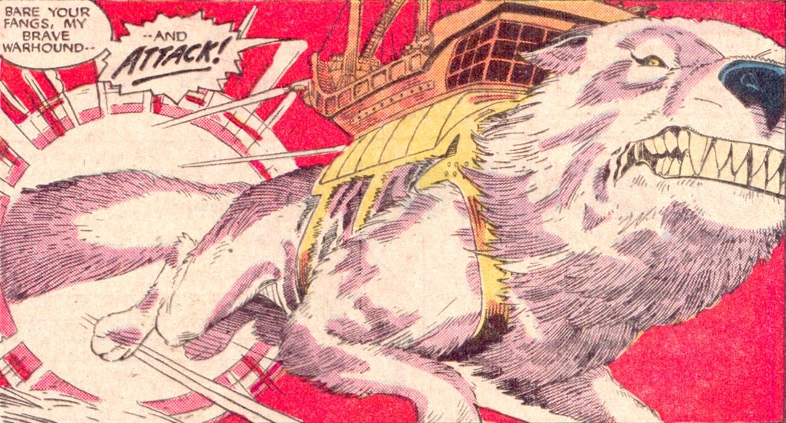
So characters like M'Rin, the chief of the surviving Fall People, and C'Jime, the giant flying fox with a ship on his back (no really) are introduced as familiar to Storm and readers but confuse later readers. It's also clear that Colossus and the Fall woman Nereel had a brief relationship on his previous visit with her son Peter being the product but she declines to tell him and he doesn't realise this despite so many clues including her son having the same name as him. Also treated poorly in this story is Dazzler who spends a lot of time first crying about Longshot's disappearance and then worrying when Rogue absorbs his power and realises this means she's also going to find out how Longshot feels about Dazzler. This trend of treating the character as a ditz is prominent in both X-Men stories in this annual and won't end here. This is a far cry from the confident young woman trying to pursue her career and handle her powers who held her own series for several years.

There's also a resort to undoing a lot in this story. The Savage Land had been destroyed for several years in real time, a change that lasted surprisingly long, but is now returned to its traditional form. The true foe is brought back from the dead along with convoluted revelations that neither the Terminus seen here nor the one who destroyed the Savage Land are the real one. And at the end of the story Psylocke mindwipes all the inhabitants to cover up the X-Men's involvement. The accusation that around this time Marvel wanted to "end innovation" has been made elsewhere and disputed in other places but it's hard to deny that this story is one massive reset switch.

All in all this is a rather disappointing tale with the plot stretched out more than it needs be and some of the characters treated as idiots. However Art Adams's art does a lot to rescue it but it can't hide the feeling that this crossover was regarded as an unwanted intruder on the series.


2nd story: I want my X-Men!
(No specific credits are printed. All the listings I've seen online credit exactly the same team as the first story.)

This is a satire on trends in the comics and more general media industry as Mojo reacts to the apparent death of the X-Men with fury... because their adventures are his top rated show. So he sets out to find some new stars and auditions numerous variant X-Men until along come the X-Babies who evade execution and rapidly prove a ratings hit.

As a protracted satirical piece there's more emphasis on humour than plot with some fun scenes such as Mojo's discussion with his "Brains Trust" who are drawn as the creative team (though the one who should be Glynis Oliver looks more like former editor Ann Nocenti to the point online guides are divided over who she is; confusingly Nocenti is also the basis for the returning character Ricochet Rita) with Chris Claremont taking a stand for quality over quantity and getting firmly told just who owns the property or the auditions of just about every conceivable alternative form of the X-Men imaginable - ones we see include a sex swapped team, a version as Transformers (now there's some ideas for Hasbro), a "naughty" team in more sexually revealing outfits (predicting one particular 1990s comics trend), a version of the team as animals, numerous more only mentioned and finally a version as young children. This parodied the trend to do versions of cartoons reimagining the characters as children that started with Muppet Babies and had already spawned The Flintstone Kids and The New Archies with A Pup Named Scooby-Doo about to debut that autumn.

Being more comedy than story this is a nice fun tale though it does continue the trend of making Dazzler ever more ditzy - here her child self spends several pages obsessing over Longshot when he gets turned into a picture by an angry Mojo. Otherwise the younger versions are generally in character albeit with some magnified traits such as Wolverine's naughtiness. The digs at the way the industry works in finding spin-off material are surprisingly prescient given the way the comics industry and especially the X-Men titles were already starting to go. This is a good fun piece.


3rd story: The High Evolutionary: Demon Night
Story: Mark Gruenwald
Pencils: Ron Lim
Inks: Tony DeZuniga
Letters: Ken Lopez
Colors: Gregory Wright
Editor: Ralph Macchio
Editor-in-Chief: Tom DeFalco

We come to one of the most retconned pieces of Marvel history - the birth of the Scarlet Witch and Quicksilver. I have lost count of just how many times this has been revisited over the years and just how many different parents they've been given. But back in 1988 there were *only* three couples who at one point or another had been assumed to be their parents and this retelling will take multiple chapters to work through them. This chapter tells how a heavily pregnant woman called Magda came to Mount Wundagore and gave birth to twins the night the demon Cthon arose but was driven off by a combination of the High Evolutionary's New Men and the sorcerer Magnus. But as the end of the chapter tells us Cthon had formed a link with the Scarlet Witch that would come to fruition decades later.

Some time has clearly passed since the previous chapter but exactly how much is never specified beyond a period of "over a decade" in which Herbert Edgar Wyndham has continued the genetic transformation of animals into humanoids and Magnus has trained them as knights. This would mean that Magnus has been occupying the body of Jonathan Drew for a long time but it's not clarified if Drew is dead or has been suppressed all this time. As Wyndham refuses to accept the claim that his friend's body is possessed by a sixth century sorcerer the point is not elaborated on. There is also no mention at all of the Second World War even though the length of time given indicates we should be at least midway through it by now. Perhaps Mark Gruenwald saw wisdom in not using the Evolutionary to explain anything either from the Golden Age itself or how particular characters had lived all the way up to the present day which was getting ever further from the war.

It's difficult to tell the story of a monumental battle in a mere two pages but given how much history there still is to wade through it's not clear what could have been dropped for a foe who hadn't actually appeared in that many stories at this point. Nor is the father of Magda's children explicitly identified at this stage, replicating the way it was originally left to fans to guess and marry up information from different series but given his significance in the Marvel Universe it's a surprising omission and it must be remembered that this chapter was going to read by more than just regular Uncanny X-Men readers. The chapter stops before reaching the other two pairs of parents but otherwise shows the backstory to one of the more memorable Avengers stories.


There are no pin-ups or other features in the annual. All in all it's a mixed affair with the lead story serving more as an excuse to restore one of the traditional settings of the Marvel Universe than a tale to develop either the lead characters or the crossover event. The saga chapter also shows the strain of having to retell and co-ordinate so much history in one go. However the X-Babies story is a wonderful piece of comedy and worth the price of admission alone.

Monday, 11 October 2021

Fantastic Four Annual 21 - The Evolutionary War

Multiple higher powers demand that Crystal returns to her husband.

As noted on Amazing Spider-Man Annual #22 that annual and this one have the lead and back-up features in opposite orders. So I'm publishing these post simultaneously to keep the sequences as clear as possible.

Fantastic Four Annual #21

1st story: Crystal Blue Persuasion
Story: Steve Englehart
Breakdowns: Kieron Dwyer
Finishes: Joe Sinnott
Letters: Lopez
Colors: Wright
Editor: Macchio
Chief: DeFalco

This annual comes from one of the more unusual periods of Fantastic Four history. Steve Englehart had shaken up the team by retiring Mr Fantastic and the Invisible Woman off to spend more time raising their son and in their placed added Crystal and the second Ms. Marvel (Sharon Ventura). Ms. Marvel had then been transformed into a female version of the Thing whilst the Thing (Ben Grimm) himself had been subject to an even further mutation into an almost pineapple form. And there were multiple tensions surrounding the Four. Not long before Englehart's run began the Human Torch (Johnny Storm) had married Alicia Masters, once Ben Grimm's long-term girlfriend. Now Johnny was on a team with his first true girlfriend Crystal, estranged from her husband Quicksilver (Pietro... his surname seems to wander between Maximoff, Magnus and Frank reflecting the numerous revelations and retcons about his parentage over the years) after an affair. It was quite a different set-up from before.

Whether it was more popular is disputed. The opening scene sees the Four's robotic receptionist Roberta hand the Thing fan mail and declare "I can't get over how popular the team has become since you revamped it!", a claim that is similarly reflected on Englehart's website. But others have pointed to the figures in the annual Statement of Ownership showing the title's sales were flatlining or even declining. And when at the start of 1988 Marvel introduced a two-tier pricing on their regular titles by raising the cover price on the nine top sellers, Fantastic Four was noticeably absent from the list. It wouldn't be the first or last time that the sales figures surrounding a controversial period are in dispute but it's unusual to find one side's claims so blatantly placed in the title itself.

(It will come as little surprise that the nine titles that had the price raised all have annuals in The Evolutionary War - the three Spider-Man titles, the three mutant books, Silver Surfer, Punisher and Avengers. Fantastic Four and West Coast Avengers - the third title written by Englehart at this time - were the only other two regular superhero series so blessed.)

And that's part of wider disputes that are partially well known because Englehart has put his side of the story out there including on his own website, though his editors' position is not so well known. Editor Ralph Macchio is interviewed by Tom DeFalco in the latter's Comics Creators on Fantastic Four (London; Titan Books, 2005) and is specifically asked about Englehart's eventual departure but just alludes to creative differences without being specific - "We had a part of the ways, creatively. I remember there was a storyline he embarked on and I knew right away that we were beginning to see the characters differently. There were stories that he wanted to do that just didn't work for me. I liked a lot of his run, but I didn't like the way he wanted to go so I made a change." (p.166) Englehart is not interviewed in the book but the-then regular artist (although not drawing the annual) Keith Pollard is. He doesn't comment on Englehart's departure directly but notes that he was told sales were up and fine but later heard a rumour third hand that he had been fired and discovered that Macchio wanted to bring back the traditional line up "in a bid to increase sales". (p.71)

It would appear that ultimately the problem was that Englehart had signed up for a run when Don Daley was Editor and Jim Shooter Editor-in-Chief but almost immediately they were replaced by Macchio and DeFalco respectively and once everyone was fully settled in disputes emerged over which way the series should go. It is not unusual for new management to not agree with or stick to what their predecessors had agreed and this has led to many a dispute. This is not the last time we'll be encountering Englehart's writing in a rather extended departure from Marvel and we'll see a number of effects of this departure as we go.

Here the main effect is the enforced writing out of Crystal from the team as her family, the Royal Family of the Inhumans, turn up and simply demand she return to her husband and family on the Moon. It is a very blunt assertion of authority perhaps reflecting the behind the scenes struggle and the result is a battle between the Four and the Royal Family. Meanwhile the High Evolutionary arrives on the Moon seeking to steal the mutagenic Terrigen Mist to advance his schemes. This leads to a brief encounter with Uatu the Watcher in which the whole event so far is recapped (hence why the disconnect between the order of the lead and back-up strips stands out) though a few errors appear in recapping the events of New Mutants Annual #4 and Amazing Spider-Man Annual #22. The battle between the Evolutionary's forces and the Inhumans is fierce with Quicksilver taking a leadership role and turning the tide, earning redemption amongst his in-laws. In the aftermath Black Bolt tries a new tactic with Crystal and actually talks her into staying. The rest of the Four depart for home.

This annual is firmly wedged between issues of the regular series and so references to a quest into the Negative Zone to find a race of aliens called the Beyonders can be a little confusing to the visiting reader, as is an appearance by a second Watcher who seems about to reveal where the Evolutionary and his forces have teleported away to until Uatu suddenly intervenes to stop him. But in general this story manages to work well as a big development for the team and stand alone sufficiently well. However as the first chapter of The Evolutionary War in which the High Evolutionary has taken an active role in the field it's a surprisingly low key encounter with the battle serving more to drive the character developments for Quicksilver than to seriously advance the lead villain's plans.


2nd story: Crystal
Story: Edward L. Norton
Breakdowns: Jackson Guice
Finishes: Jose Marzan
Letters: Ken Lopez
Colors: Gregory Wright
Editor: Ralph Macchio
Chief: Tom DeFalco

"Edward L. Norton" has a history of being used as a pseudonym in various Marvel issues. Here it hints at the dispute over the series. This is a very odd little story where the dialogue and pictures rarely seem to be singing from the same hymn sheet, suggesting a significant rewrite. It would appear that this story was meant to establish Crystal agreeing to go with the Fantastic Four to see out their quest with the Beyonders but was instead rewritten so that she stays permanently on the Moon with Quicksilver and the Inhumans. In story Crystal is even told that she is expected to look as though she likes living with her husband to set a public example. It's hard to not think of real life Royals also forced into such public displays of affection despite private strife even though this annual came out a few years before some of the most famous revelations.

Quicksilver had been on an odd character journey through the 1980s in large part because Englehart didn't agree with him being a hero and not always accepting other writers' attempts to row the character back. So at times he was written as mad and other times this was explained as the influence of the insane Inhuman Maximus the Mad only for later Englehart stories to revert the character to villainy. Here he's shown regaining his speed powers which had been temporarily constrained by a mental block but he's also shown acting suspiciously when at the end of the story he leaks details of the Fantastic Four's quest to none other than Doctor Doom. The dialogue has him stating that he wants revenge on Kristoff, the other Doom who is currently ruling Latveria, and that an empowered Doom is best placed to defeat him but this reads so oddly that it is almost certainly a rewrite of the script working against the dialogue.

As a result we're left with a short story that's trying to settle Crystal back into married life but it just doesn't hold together well because of all the conflicting forces pulling on it.


3rd story: The High Evolutionary: Silver and Crimson
Story: Mark Gruenwald
Pencils: Ron Lim
Inks: Tony DeZuniga
Letters: Ken Lopez & Joe Albelo
Colors: Gregory Wright
Editor: Ralph Macchio
Editor-in-Chief: Tom DeFalco

This is more of a straightforward single incident chapter as Herbert Edgar Wyndham finally encounters the Werewolf that killed Merriam Drew and creates his armour in order to protect himself in future encounters then captures it when it later invades the citadel. However it seems to have driven away the Moloids for good. The biggest developments come in side moments as we learn that Jonathan Drew has departed in grief, even though he has left his daughter behind in suspended animation, and that the uranium mine has generated enough wealth to buy the most advanced technology and expertise available.

It's a good attempt to explain just how a man from the 1930s could have come up with all the long-term technology the High Evolutionary has been shown to have over the years but it does ring a little hollow to suggest the solution was merely wealth. However the alternative would have required adding either another mysterious benefactor or some alien influence which doesn't quite fit with the character's outlook. Otherwise this chapter is straightforward and the only real problem is the out of sequence printing.


Other material includes a pin-up gallery by Keith Pollard and Joe Sinnott of the Fantastic Four and other key characters including the Invisible Woman (who expresses her surprise at some recent letters to the comic) and Crystal who declares "I'll never leave again!" with an editor's note explaining "this feature was compiled before the astounding events of this issue". It's another sign of the conflict over the direction of this series. Sadly this conflict means the annual as a whole is a rather disappointing package even though the lead story works well on its own.